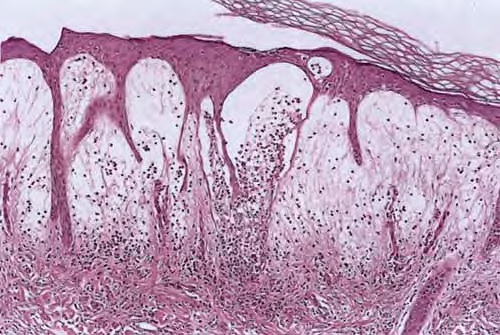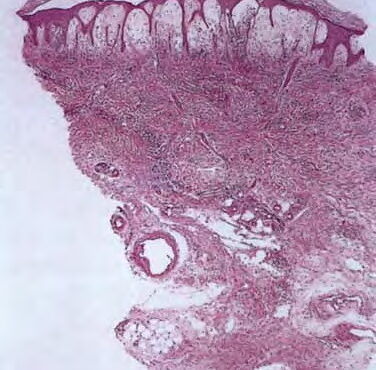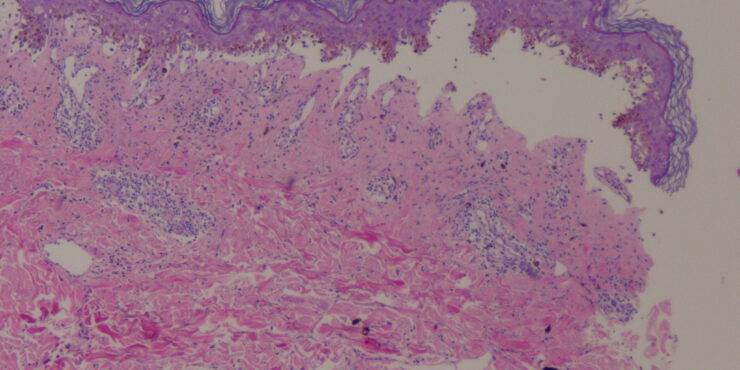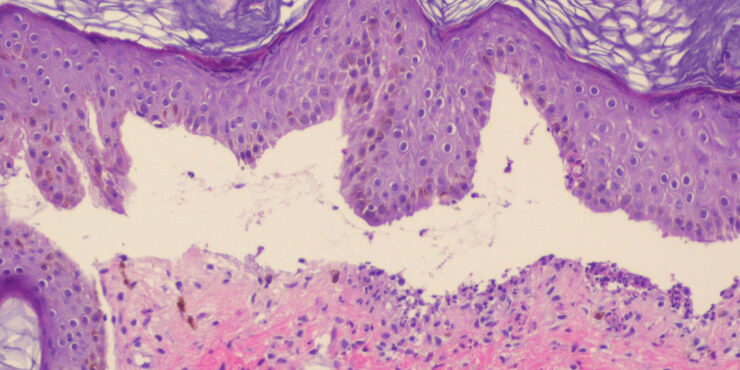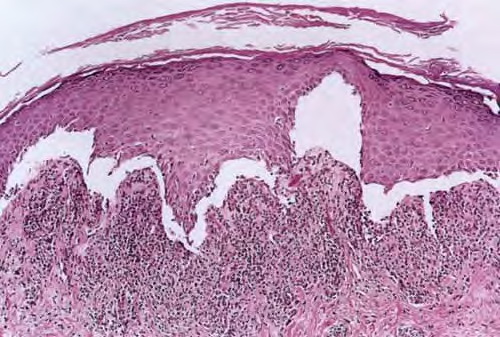
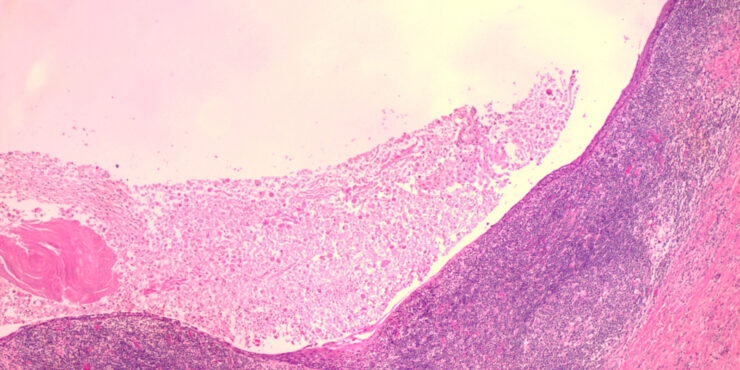
Branchial cleft cyst =كيسة الشق الغلصمي

Branchial cleft cyst =كيسة الشق الغلصمي Branchial Cyst   (Branchial Cleft   Cyst) Sequestration of first or second branchial cleft membranes results in these cysts, sinuses, or tags. EPIDEMIOLOGY Branchial cleft cysts are largely sporadic, but autosomal dominant cases have been reported. There is no gender predominance. Ten percent of lesions are bilateral. ETIOLOGY AND […]

Read More
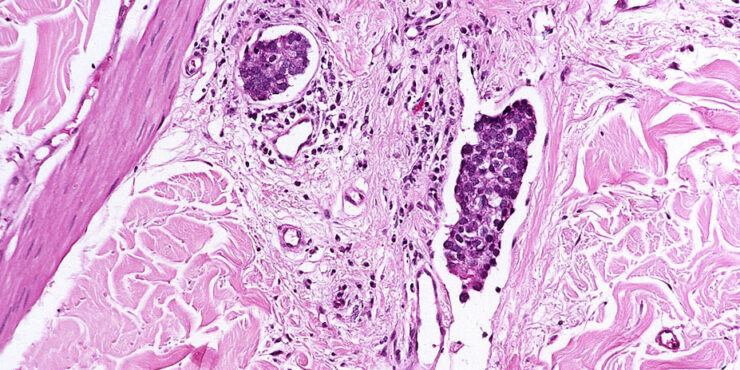
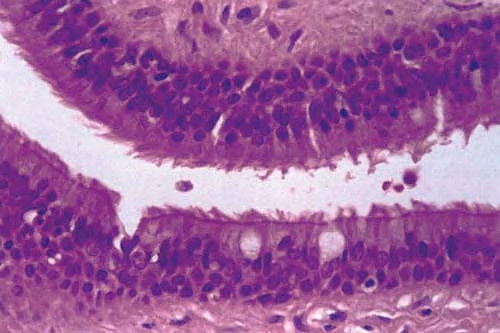
Bullous erythema multiforme =الحمامى عديدة الأشكال الفقاعية

Bullous erythema multiforme =الحمامى عديدة الأشكال الفقاعية OLYMPUS DIGITAL CAMERA OLYMPUS DIGITAL CAMERA Erythema Multiforme   Erythema multiforme (EM) is an acute self-limited, usually mild, and often relapsing mucocutaneous syndrome. The disease is usually related to an acute infection, most often a recurrent herpes simplex virus (HSV) infection. EM is defined only by its clinical […]

Read More

Bullous impetigo=القوباء الفقاعية

Bullous impetigo=القوباء الفقاعية OLYMPUS DIGITAL CAMERA OLYMPUS DIGITAL CAMERA BULLOUS IMPETIGO . Three types of skin eruptions can be produced by phage group II S. aureus, particularly strains 77 and 55: (1) bullous impetigo, (2) exfoliative disease (SSSS), and (3) nonstreptococcal scarlatiniform eruption (staphylococcal scarlet fever). All three represent varying cutaneous responses to extracellular exfoliative […]

Read More

Bullous lupus erythematosus = الذئبة الحمامية الفقاعية

Bullous lupus erythematosus = الذئبة الحمامية الفقاعية OLYMPUS DIGITAL CAMERA OLYMPUS DIGITAL CAMERA OLYMPUS DIGITAL CAMERA Bullous Systemic Lupus Erythematosus Vesicles and bullae may develop in patients with SLE. In contrast to dermatitis herpetiform is, the lesions are not symmetrical and do not have a predilection for extensor surfaces of arms, elbows, or scalp; they […]

Read More

Bullous mastocytosis =داء الخلايا البدينة الفقاعي

Bullous mastocytosis =داء الخلايا البدينة الفقاعي mastocytosis Urticaria pigmentosa, although occasionally showing an autosomal dominant mode of transmission ( with a possible relationship to mutations in the KIT gene (310), in most instances occurs without a family history. It can be divided into four forms: (a) urticaria pigmentosa arising in infancy or early childhood without […]

Read More
error: Content is protected !!