
👤 Users: 0 | 👁 Guests: 5 | 🌍 Total: 5
Macul = البقعة
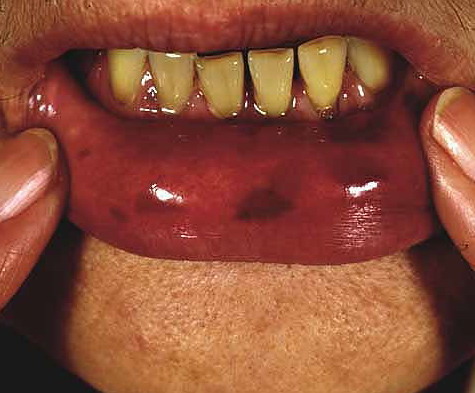
MACULE
A macule is a flat lesion, even with the surface level of surrounding skin, perceptible as an area of color different from the surrounding skin or mucous membrane. Macules are non-palpable. Their shapes are varied and borders may be distinct or vague. Maculosquamous is a neologism invented to describe macules with fine non-palpable scaling, which may become apparent only after light scraping and scratching.
Perhaps the most important additional feature of a lesion other than primary morphology is color. Lesional color, which is often the first visual assessment made, is reliably reproducible with particular
types of pathologies, such as destruction of melanocytes, dilatation of dermal blood vessels, or inflammation of vessel walls with extravasation of red blood cells. As such, color provides meaningful insight into pathologic processes of the skin and facilitates clinical diagnosis. Pigmentary changes represent an important and common type of macular color change and may be described as hyperpigmented (as in post-inflammatory hyperpigmentation), hypopigmented (as in tinea versicolor), or depigmented (as in vitiligo).
|
Implications of Color Changes in Altered Skin |
|||||||||||||||||||||||||||||||||||||||||||||||||||
|