ERYSIPELOID
Etiology and Epidemiology
Erysipeloid, an acute infection of traumatized skin caused by E. rhusiopathiae (formerly E. insidiosa), occurs most frequently in fishermen, butchers, kitchen workers, and others who handle raw fish, poultry (especially turkey), and meat products. The disease occurs primarily during the summer months.
ERYSIPELOID AT A GLANCE
- An occupational zoonosis caused by Erysipelothrix rhusiopathiae and associated with percutaneous trauma while handling raw fish or poultry.
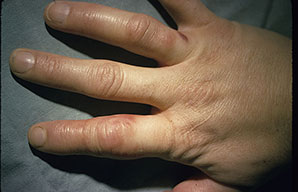
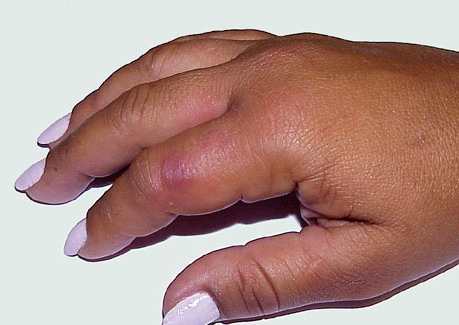
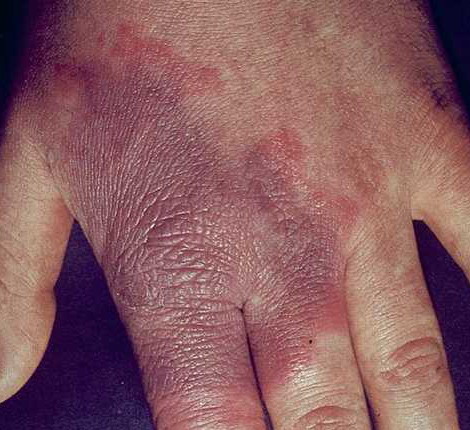
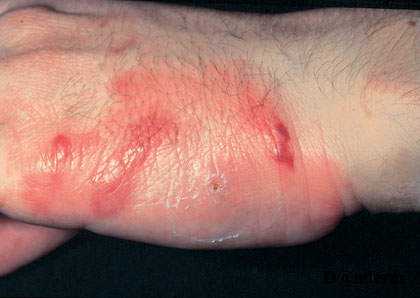
Classic dermatologic presentation is localized non-suppurative purple-red plaques on the dorsal hands. Rare chronic and bacteremic forms exist
- rhusiopathiae is a thin, Gram-positive, microaerophilic, nonmotile bacillus that is hardy enough to survive putrefaction of tissue and exposure to saltwater or freshwater. The organism is found in rats, birds, the slime on saltwater fish, and crabs and other shellfish, and is associated with poultry, meats, hides, and bones.
Clinical Findings
HISTORY
The patient is usually employed in the fishing or animal product industry. After inoculation, there is an incubation period of 2 to 7 days. Initially, burning pain occurs at the injured site, then a violaceous dermal plaque develops. Lymphangitis and regional adenopathy occasionally occur, as well as low-grade fever and malaise. Bacteremia and endocarditis are rare but serious sequelae. Untreated, erysipeloid usually heals on its own within 3 weeks.
CUTANEOUS LESIONS
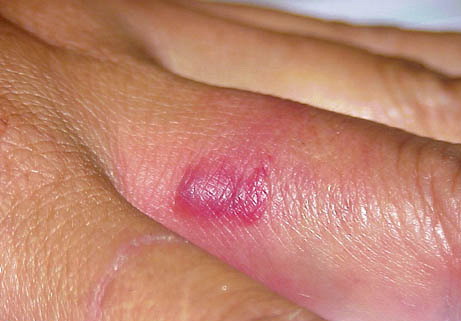
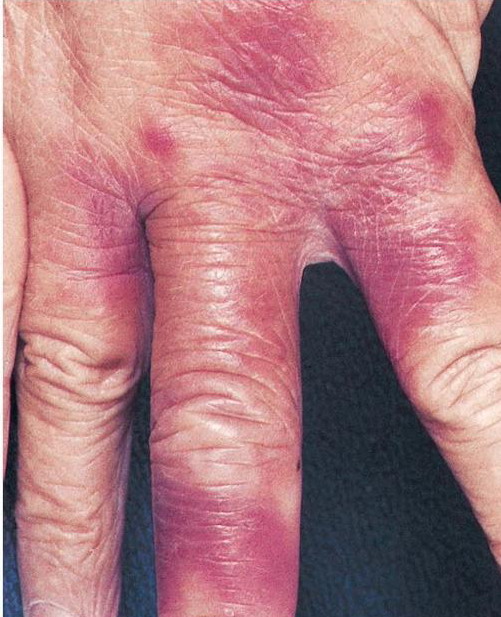
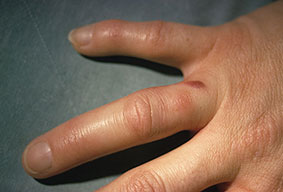
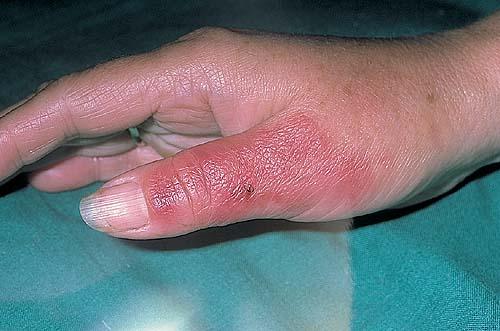
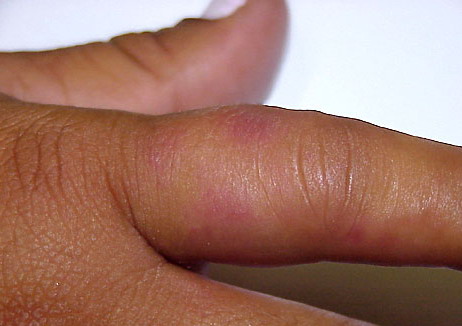
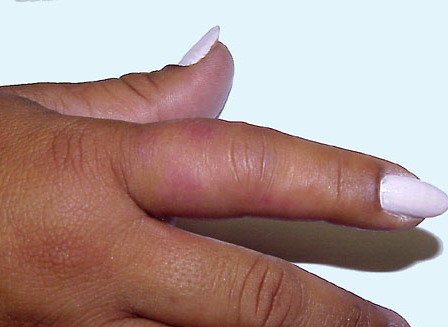
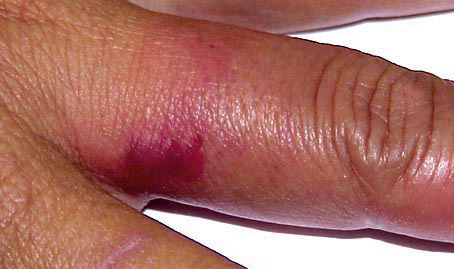
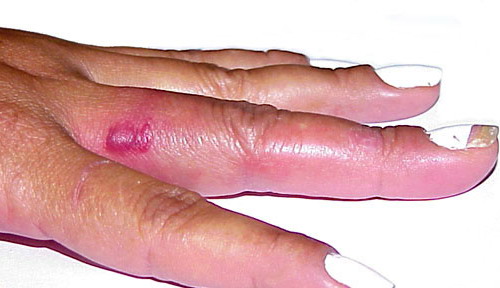
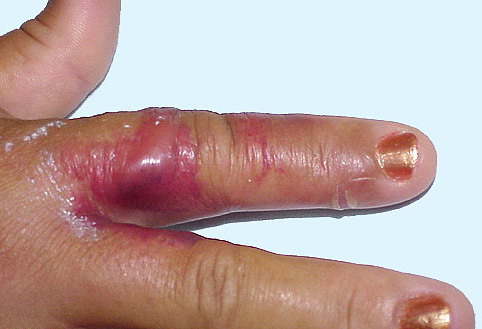
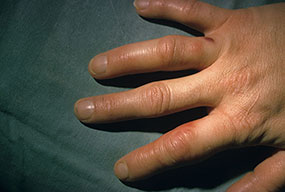
The distinctive erysipeloid lesion is usually on a finger or the back of the hand; is violaceous, warm, and tender; and has well-defined, raised margins with an angular or polygonal border . It often involves the web spaces but spares the terminal phalanges and does not progress beyond the wrist. The borders usually expand, whereas the central region clears without desquamation or ulceration. Rarely, multiple lesions distant from the original site of injury arise, presumably through bacteremic spread. Post-inflammatory hyperpigmentation may persist after the lesion resolves.
RELATED PHYSICAL FINDINGS
Arthritis may be associated with the local lesion, and,in rare cases, distant joints are involved. Sepsis produces typical peripheral stigmata, including signs of endocarditis.
Treatment
The treatment of choice for erysipeloid is high-dose penicillin or ampicillin for 7 to 10 days. Patients who cannot take penicillins may be treated with a third-generation cephalosporin, imipenem, or ciprofloxacin . This recommendation is based primarily on in vitro studies, not clinical experience. If arthritis, septicemia, or endocarditis is present, the penicillin dosage should be increased and the drug should be administered intravenously for several weeks.