👤 Users: 0 | 👁 Guests: 2 | 🌍 Total: 2
Drug alopecia =الحاصة بسبب الأدوية
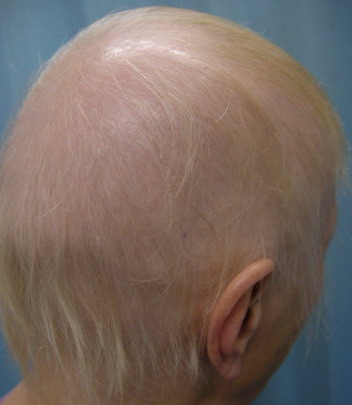
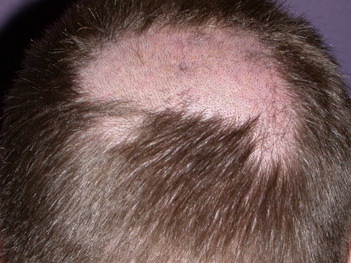
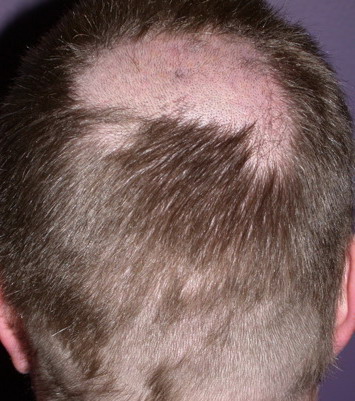
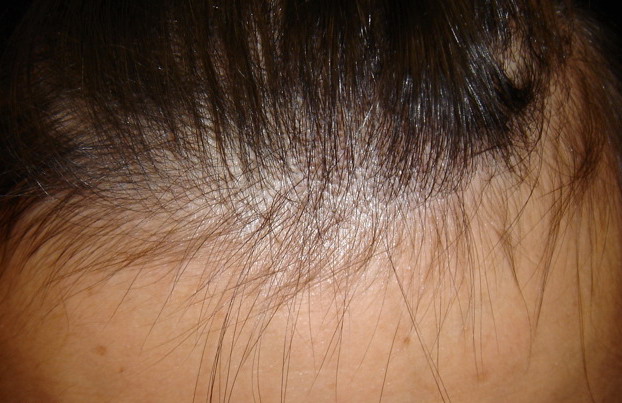
Drug alopecia
There is a basic rule of pharmacology that declares that every drug that works has some side effects in some certain circumstances. Besides the common side-effects one is likely to see in many prescription medications is hair loss or thinning of the hair, depending on how the manufacturer words it.
With the exception of chemotherapy agents along with Antineoplastic family of drugs, hair loss as a side-effect is rare, but does occur in more then 300 known prescriptions, over the counter and illegal drugs.(1)
According to a 1994 Italian study from the University of Bologna, Italy, Drugs may affect hair follicles in the anagen phase (the growth phase) through 2 main different possibilities: Anagen Effluvium and Telogen Effluvium.
“In anagen effluvium, hair loss usually occurs within days to weeks of drug administration, whereas in telogen effluvium, hair loss becomes evident 2 to 4 months after starting treatment.” (2) The study claims the common cause of anagen effluvium by drugs is from the antineoplastic family of medications used as chemotherapy treatment. Antineoplastic defined: Any of several drugs that control or kill neoplastic cells; used in chemotherapy to kill cancer cells; all have unpleasant side effects that may include nausea and vomiting and hair loss and suppression of bone marrow function. WordWeb Dictionary Anagen effluvium is a prominent adverse effect of antineoplastic agents, which cause acute damage of rapidly dividing hair matrix cells.(2) Telogen effluvium may be a consequence of other drugs used to treat: gout, arthritis, depression, heart problems and high blood pressure. |
“Drug-induced hair loss is usually reversible after interruption of treatment. The prevalence and severity of alopecia depend on the drug as well as on individual predisposition. Some drugs produce hair loss in most patients receiving appropriate dosages while other drugs are only occasionally responsible for hair abnormalities.” (2)
According to a 1995 French report, 15-percent of patients taking Lithium experience hair loss or thinning hair.(3) The study also found:
“Among antihypertensive drugs, systemic or topic beta-adrenoceptor antagonists should be considered as possible causes of hair loss. Hair loss from salicylates or nonsteroidal analgesics occurs in a very small percentage of patients. All anticoagulant and antithyroid drugs can produce hair loss. Diffuse hair loss can also be associated with the use of oral contraceptives, while receiving the pill and after stopping the drug.”(3) Determining if hair loss as a side-effect of a drug treatment is not easy. The only way to confirm hair loss as an unwanted side-effect is to cease taking the drug to see if improvement occurs. HOWEVER, patients who suspect their drug is causing telogen effluvium hair loss should not cease the treatment until consulting with their physician. Patients can tolerate many side-effects from their medication but hair loss is one of the least desire and may lead to patient non-compliance of physician directed drug treatment. Doctors should regularly question their patients on possible side-effects and specifically mention hair loss. |
The drugs are listed by category, according to the conditions they treat, then by brand name first followed by the drug’s generic name in parentheses. In some categories, individual drugs are not listed. For these conditions, you will want to discuss the possibility of hair loss as a side effect of using any of the drugs that treat that particular condition, since many do contribute to hair loss.
Acne
All drugs derived from vitamin A as treatments for acne or other conditions, including:
- Accutane (isotretinoin)
Blood
Anticoagulants (blood thinners), including:
- Panwarfin (warfarin sodium)
- Sofarin (warfarin sodium)
- Coumadin (warfarin sodium)
- Heparin injections
Cholesterol
Cholesterol-lowering drugs, including:
- Atronid-S (clofibrate)
- Lopid (gemfibrozil)
Convulsions/ Epilepsy
- Anticonvulsants, including:
- Tridone (trimethadione)
Depression
- Antidepression drugs, including:
- Prozac (fluoxetine hydrochloride)
- Zoloft (sertraline hydrochloride)
- Paxil (paroxetine)
- Anafranil (clomipramine)
- Janimine (imipramine)
- Tofranil (imipramine)
- Tofranil PM (imipramine)
- Adapin (doxepin)
- Sinequan (doxepin)
- Surmontil (trimipramine)
- Pamelor (nortriptyline)
- Ventyl (nortriptyline)
- Elavin (amitriptyline)
- Endep (amitriptyline)
- Norpramin (desipramine)
- Pertofrane (desipramine)
- Vivactil (protriptyline hydrochloride)
- Asendin (amoxapine)
- Haldol ( haloperidol)
Diet
- Amphetamines
Fungus
- Antifungals
Glaucoma
The beta-blocker drugs, including:
- Timoptic Eye Drops (timolol)
- Timoptic Ocudose (timolol)
- Timoptic XC (timolol)
Gout
- Lopurin (allopurinol)
- Zyloprim (allopurinol)
Heart
Many drugs prescribed for the heart, including those known as the beta blockers, which are also used to treat high blood pressure, and include:
- Tenormin (atenolol)
- Lopressor (metoprolol)
- Corgard (nadolol)
- Inderal and Inderal LA (propanolol)
- Blocadren (timolol)
High Blood Pressure
See Above list of beta blockers under “Heart”
Hormonal Conditions
All hormone-containing drugs and drugs prescribed for hormone-related, reproductive, male-specific, and female-specific conditions and situations have the potential to cause hair loss, including:
- Birth Control Pills
- Hormone-replacement therapy (HRT) for women (estrogen or progesterone)
- Male androgenic hormones and all forms of testosterone
- Anabolic steriods
- Prednisone and other steroids
Inflammation
Many anti-inflammatory drugs, including those prescribed for localized pain, swelling and injury.
- Arthritis drugs
- Nonsteroidal Anti-Inflammatory Drugs including:
- Naprosyn (naproxen)
- Anaprox (naproxen)
- Anaprox DS (naproxen)
- Indocin (indomethacin)
- Indocin SR (indomethacin)
- Clinoril (sulindac)
An anti-inflammatory that is also used as a chemotherapy drug:
- Methotrexate (MTX)
- Rheumatex (methotrexate)
- Folex (methotrexate)
Parkinson’s Disease
- Levadopa / L-dopa (dopar, larodopa)
Thyroid Disorders
- Many of the drugs used to treat the thyroid
Ulcer
Many of the drugs used to treat indigestion, stomach difficulties, and ulcers, including over-the-counter dosages and prescription dosages.
- Tagamet (cimetidine)
- Zantac (ranitidine)
- Pepcid (famotidine)