👤 Users: 0 | 👁 Guests: 1 | 🌍 Total: 1
Chronic cumulative irritant contact eczema=اكزما التماس التخريشية التراكمية المزمنة
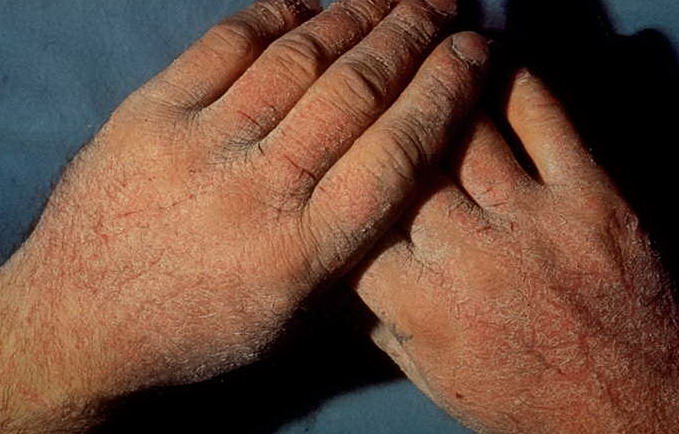
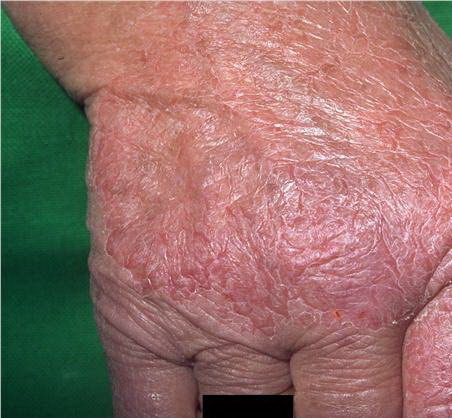
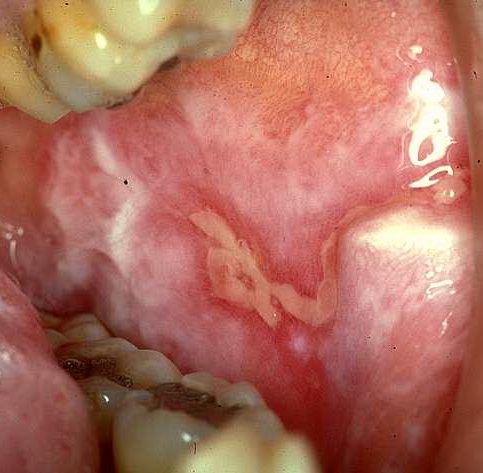
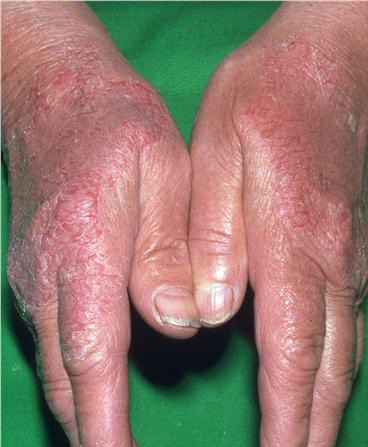
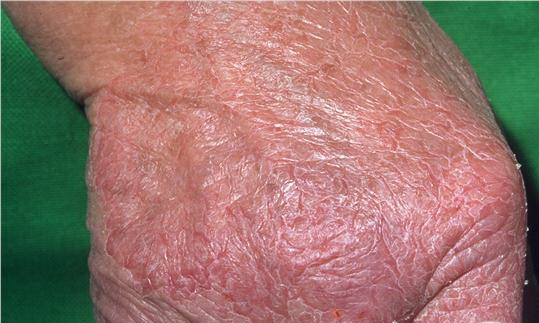
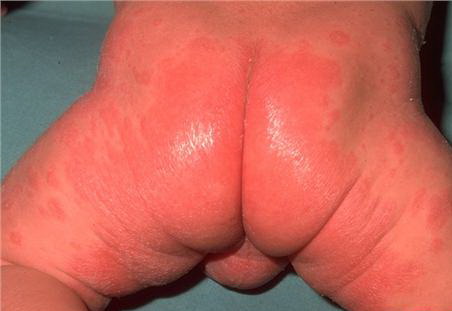
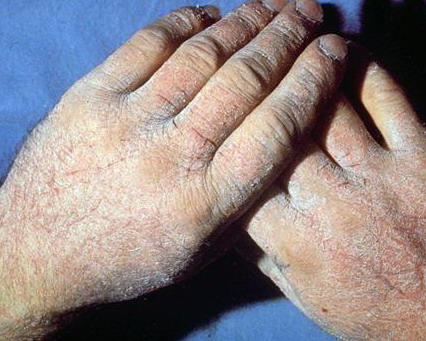
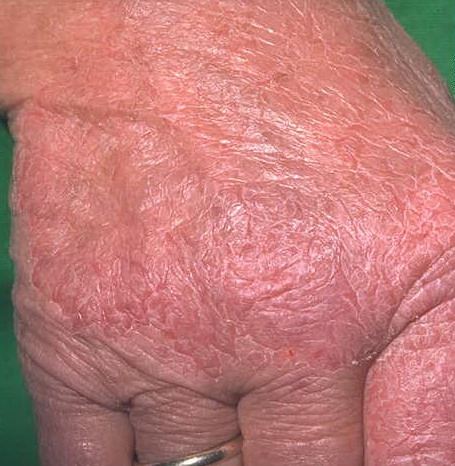
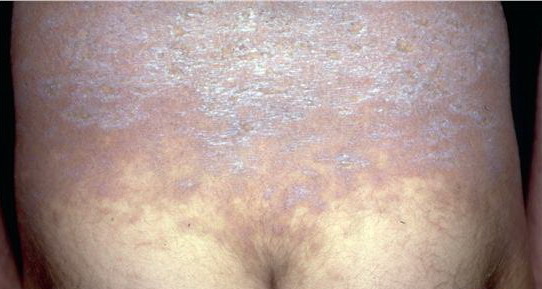
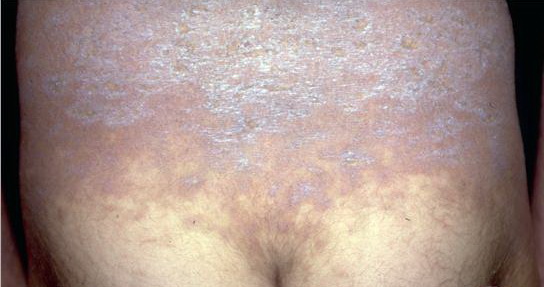
Chronic cumulative irritant contact eczema
Irritant contact dermatitis (ICD) is inflammation of the skin typically manifested by erythema, mild edema, and scaling. Irritant contact dermatitis is a nonspecific response of the skin to direct chemical damage that releases mediators of inflammation predominately from epidermal cells. A corrosive agent causes the immediate death of epidermal cells as manifested by chemical burns and cutaneous ulcers
Irritant contact dermatitis remains understudied compared to allergic contact dermatitis. Most articles on contact dermatitis concern allergic contact dermatitis. This largely reflects the fact that with patch testing, a specific hypersensitivity and a probable cause of dermatitis can be identified in most cases of allergic contact dermatitis. No diagnostic test exists for irritant contact dermatitis. The diagnosis rests on the exclusion of other cutaneous diseases (especially allergic contact dermatitis) and on the clinical appearance of dermatitis at a site sufficiently exposed to a known cutaneous irritant.
In the consumer world, the term hypoallergenic is used widely, although no Food and Drug Administration–approved definition of hypoallergenic exists. A necessity exists for hypoirritating cleansers, cosmetics, moisturizers, and protectants; however, no standard method exists to identify products that are of great use to individuals with susceptible skin (eg, atopic dermatitis, facial skin of individuals with rosacea).
The hands are the most important sites of irritant contact dermatitis. Most occupational skin disorders are irritant contact dermatitis resulting from repeated workplace exposure of the hands to soaps, cleansers, and solvents.
Irritant contact dermatitis is the clinical result of sufficient inflammation arising from the release of proinflammatory cytokines from skin cells (principally keratinocytes), usually in response to chemical stimuli. Different clinical forms may arise. The 3 main pathophysiological changes are skin barrier disruption, epidermal cellular changes, and cytokine release.
A wide range of chemicals with sufficient concentration or duration of exposures are capable of acting as cutaneous irritants. Common cutaneous irritants include detergent and water. Most cases of homemaker’s eczema are irritant contact dermatitis resulting from repeated skin exposure to low-grade cutaneous irritants, particularly soaps, water, and detergents.
Cumulative irritant contact dermatitis from repeated mild skin irritation from soap and water is common. For example, hand-washing frequency of more than 35 times per shift was associated strongly with occupational hand dermatitis in intensive care unit workers (odds ratio = 4.13).
Solvents are another cause of cutaneous irritation because they remove essential fats and oils from the skin, which increases transepidermal water loss and renders the skin susceptible to the increased direct toxic effects of other previously well-tolerated cutaneous exposures. The alcohol propanol is less irritating to the skin than the detergent sodium lauryl sulfate.
p Ka, an acid dissociation constant, is a quantitative measure of the strength of an acid in solution. p Ka has been shown to be highly predictive of acute skin irritation for acids and bases; acids with a p Ka of less than 4 and bases with a p Ka of less than 8 are highly irritative.1
Microtrauma also may produce skin irritation. A common example is fiberglass, which may produce pruritus with minimal visible inflammation in susceptible individuals. Many plant leaves and stems bear small spicules and barbs that produce direct skin trauma.
Physical irritants (eg, friction, abrasive grains, occlusion) and detergents such as sodium lauryl sulfate in combination produce more irritant contact dermatitis in combination than singly though propanol and sodium lauryl sulfate, are not additive irritants.
Skin irritation predisposes the skin to develop sensitization to topical agents. Skin irritation by both nonallergenic and allergenic compounds induces Langerhans cell migration and maturation.2 An exacerbation of irritant contact dermatitis may reflect development of allergic contact dermatitis to topical creams, medications, or rubber gloves.
The pathogenesis of irritant contact dermatitis involves resident epidermal cells, dermal fibroblasts, endothelial cells, and various leukocytes interacting with each other under the control of a network of cytokines and lipid mediators. Keratinocytes play an important role in the initiation and perpetuation of skin inflammatory reactions through the release of and responses to cytokines. Resting keratinocytes produce some cytokines constitutively.
A variety of environmental stimuli (eg, ultraviolet light, chemical agents) can induce epidermal keratinocytes to release inflammatory cytokines (interleukin 1, tumor necrosis factor-alpha), chemotactic cytokines (interleukin 8, interleukin 10), growth promoting cytokines (interleukin 6, interleukin 7, interleukin 15, granulocyte-macrophage colony-stimulating factor, transforming growth factor a), and cytokines regulating humoral versus cellular immunity (interleukin 10, interleukin 12, interleukin 18). Intercellular adhesion molecule 1 promotes the infiltration of leukocytes into the epidermis in cutaneous inflammatory reactions, including irritant contact dermatitis.
Significantly increased numbers of dividing keratinocytes are present 48 and 96 hours after exposure to the anionic emulsifying agent sodium lauryl sulfate (used in medicated shampoos, skin cleansers, acne treatments, and toothpastes and as an experimental irritant). At sites of previous irritant contact dermatitis chronic skin reactivity to sodium lauryl sulfate, hyperreactivity developed even after the 10th week postinduction compared with normal sites.3,4
All irritants provoke a similar pattern of cellular infiltration in the dermis; the densities of most of the cell types rise in proportion to the intensity of inflammation. Within the epidermis, marked differences exist in the patterns of cellular infiltration among different irritants.
Individuals with a past history of atopic dermatitis are prone to develop irritant contact dermatitis of the hands. Polymorphisms in the filaggrin (FLG) gene, which result in loss of filaggrin production, may alter the skin barrier and are a predisposing factor for atopic dermatitis. FLG null alleles are associated with increased susceptibility to chronic irritant contact dermatitis
History
A detailed history is required because the diagnosis of irritant contact dermatitis rests on the history of exposure of the affected body site to the cutaneous irritant. Patch testing also is used in severe or persistent cases to exclude allergic contact dermatitis as a component of the individual’s cutaneous manifestations.
Primary subjective symptoms of irritant contact dermatitis include the following:
- History of sufficient exposure to a cutaneous irritant is noted.
- Onset of symptoms occurs within minutes to hours of exposure in simple acute irritant contact dermatitis. Acute delayed irritant contact dermatitis is characteristic of certain irritants, such as benzalkonium chloride (eg, zephiran, a preservative and disinfectant), which elicits a retarded (8-24 h after exposure) inflammatory reaction.10
- The onset of signs and symptoms may be delayed by weeks in cumulative irritant contact dermatitis. Cumulative irritant contact dermatitis is a consequence of multiple incidents of subthreshold damage to the skin, with the time between exposures being too short for a resolution of skin barrier function. Patients with sensitive skin (ie, atopic individuals) have a decreased irritant threshold or a prolonged restoration time, making them more vulnerable to clinical irritant contact dermatitis. Cumulative irritant contact dermatitis is not dependent on exposure to a potent irritant, but exposure to weak irritants, which prompt the reaction. Often, the exposure (ie, water) is not only at work but also at home. These patients report both itching and pain caused by fissuring of the hyperkeratotic skin (chapping).
- Pain, burning, stinging, or discomfort exceeding pruritus early in the clinical course occur.
Less important subjective criteria for irritant contact dermatitis include the following:
- Onset of dermatitis within 2 weeks of exposure
- Reports of many other coworkers or family members affected
Occupational irritant contact dermatitis typically affects workers who are new to a job, who are constitutionally more susceptible to irritant contact dermatitis, or who have not learned to protect their skin from cutaneous irritants.
Verified history of many other coworkers affected by similar contact dermatitis indicates irritant contact dermatitis because most allergens do not sensitize more than a few percent of exposed individuals. Exceptions are potent contact sensitizers, such as the contact allergen in poison ivy, or experimental sensitizers such as diphencyprone or dinitrochlorobenzene (DNCB).
Irritant contact dermatitis is a major occupational disease. The physician needs to take an occupational history from adults with suspect irritant contact dermatitis. Irritant contact dermatitis is a major occupational disease. The physician needs to take an occupational history from adults with suspect irritant contact dermatitis. Most affected workers have a degree of permanent injury that is lower than that of other occupational diseases; however, the compensation pay was higher for skin diseases than for diseases of the respiratory system or musculoskeletal disorders, according to a study in Denmark. Irritant contact dermatitis is the most common occupational skin disorder; skin disorders comprise up to 40% of occupational illnesses.
Individuals with history of atopic dermatitis (especially of the hands) are more susceptible to irritant contact dermatitis, particularly of the hands.
Other causes of contact dermatitis (particularly allergic contact dermatitis) must be excluded by history and/or patch testing to the relevant allergens.
Physical
Rietschel and Fowler proposed the primary diagnostic criteria for irritant contact dermatitis as follows11 :
- Macular erythema, hyperkeratosis, or fissuring predominating over vesiculation
- Glazed, parched, or scalded appearance of the epidermis
- Healing process beginning promptly on withdrawal of exposure to the offending agent
- Patch testing negative and includes all possible allergens
Minor objective criteria for irritant contact dermatitis include the following:
- Sharp circumscription of the dermatitis
- Evidence of gravitational influence such as a dripping effect
- Lower tendency for the dermatitis to spread than in cases of allergic contact dermatitis
- Morphologic changes suggesting small differences in concentration or contact time producing large differences in skin damage
Individuals may develop a habit of continuing to rub a site initially affected by irritant contact dermatitis and may develop secondary neurodermatitis or lichen simplex chronicus (lichenification), which may be accepted as a sequela of an occupational injury.
Causes
Almost any material may be a cutaneous irritant with sufficient exposure in time and/or concentration. Note the following:
- Dry air: Dry air renders the skin more susceptible to cutaneous irritants. Sufficiently dry air alone may provoke irritant contact dermatitis. Most cases of winter itch are a result of dry skin from the drier air found during sustained periods of cold weather.
- Temperature variation: An increase in temperature (up to 43ºC from 20ºC) increases the cutaneous effect of an irritant.12
- Water: Continual exposure to water may produce maceration or repeated evaporation of water from the skin may produce cutaneous irritation by desiccation of the skin. Even distilled water experimentally provokes increased CD11c+ cells and neutrophils in the epidermis.
- Solvents: Many individuals are exposed to solvents, particularly at work. Solvents such as alcohol or xylene remove lipids from the skin, producing direct irritant contact dermatitis and rendering the skin more susceptible to other cutaneous irritants, such as soap and water.
- Alcohol: Irritant contact dermatitis from alcohol most often is cumulative. Manual workers may wash their hands inappropriately with solvents to remove oil, grease, paints, or other materials; thus, they develop irritant contact dermatitis. Inappropriate skin cleansing is a primary cause of irritant contact dermatitis in the workplace. Washing facilities and methods must be inspected when investigating the workplace for 1 or more cases of occupational irritant contact dermatitis. The irritating agents include aromatic, aliphatic, and chlorinated solvents, as well as solvents such as turpentine, alcohol, esters, and ketones. Some organic solvents produce an immediate erythematous reaction on the skin and remove lipids from the stratum corneum.
- Metalworking fluids: Neat oils most commonly produce folliculitis and acne. They may cause irritant contact dermatitis (as well as allergic dermatitis). Water-based metalworking fluids often cause irritant contact dermatitis in exposed workers; surfactants in these fluids are the main culprit.
- Cumulative irritant contact dermatitis: This is common in many occupations that often are termed wet work. Health care workers wash their hands 20-40 times a day, producing cumulative irritant contact dermatitis. Similar exposures occur among individuals who wash hair repeatedly or in cleaners or kitchen workers. Multiple skin irritants may be additive or synergistic in their effects. Alcohol-based hand-cleansing gels cause less skin irritation than hand washing and therefore are preferred for hand hygiene from the dermatological point of view. An alcohol-based hand-cleansing gel may even decrease, rather than increase, skin irritation after a hand wash, owing to a mechanical partial elimination of the detergent.13
- Microtrauma: Many plant leaves and stems bear small spicules and barbs that produce direct skin trauma.
- Fiberglass: Fiberglass produces direct damage to the skin, usually manifested by pruritus that may result in excoriation and secondary skin damage. Cutaneous irritation primarily is caused by fiberglass with diameters exceeding 4.5 µm. Controversy surrounds whether individuals with dermatographism are more susceptible to fiberglass dermatitis. Most workers with irritant contact dermatitis resulting from fiberglass develop hardening, in which they tolerate further cutaneous exposure to fiberglass.
- Mechanical trauma: Pressure produces callus formation. Pounding produces petechia or ecchymosis. Sudden trauma or friction produces blistering in the epidermis. Repeated rubbing or scratching produces lichenification. Sweating and friction appear to be the main cause of dermatitis that appears under soccer shin guards in children.14
- Rubber gloves: Some rubber gloves may provoke direct cutaneous irritation. Many workers complain of irritation from the powder in rubber gloves. Remember that gloves compromised by a hole may allow an irritant to enter; occlusion dramatically increases skin damage from the irritant. Occlusion accentuates the effects, good or bad, of topical agents. Kerosene may produce skin changes similar to that of toxic epidermal necrolysis following occluded cutaneous exposure. Excessive amounts of ethylene oxide in surgical sheets also may produce similar changes.
- Sodium lauryl sulfate: This chemical is found in some topical medications, particularly acne medications, and is a classic experimental cutaneous irritant.
- Hydrofluoric acid: A hydrofluoric acid burn is a medical emergency. Remember that onset of clinical manifestations may be delayed after the acute exposure (crucial to diagnosis). Unfortunately, hydrofluoric acid burns are most frequent on the digits where the pain is most severe and management is most difficult (see Hydrofluoric Acid Burns).
- Alkalis: Skin surfaces normally have an acidic pH and alkalis (eg, many soaps) produce more irritation than many acids. The “acid mantle” of the stratum corneum seems to be important for both permeability barrier formation and cutaneous antimicrobial defense. Use of skin cleansing agents, especially synthetic detergents with a pH of approximately 5.5 rather than alkaline pH, may help prevent skin disease
Histologic Findings
The histopathology of acute experimental irritant contact dermatitis has been studied to a greater extent than chronic irritant contact dermatitis, which is the primary clinical complaint.
Cellular changes seen in the skin vary according to the chemical nature and concentration of the irritant applied, duration of exposure, severity of ensuing response, and time of sampling for acute irritant contact dermatitis. Many primary irritants cause overt necrosis if applied in a sufficiently high concentration for sufficient time.
Most histologic examinations of irritant contact dermatitis reveal some degree of intercellular edema or spongiosis in the epidermis. Spongiosis usually is less pronounced than that seen in allergic contact dermatitis reactions.
Parakeratosis also is observed widely in irritant contact dermatitis reactions.
The histology of chronic irritant contact dermatitis is one of hyperkeratosis with areas of parakeratosis, moderate-to-marked epidermal hyperplasia (acanthosis), and elongation of the rete ridges.
Medical Care
Acute irritant contact dermatitis reactions to potent irritants (eg, acids, alkaline solutions) are comparable to a chemical burn and can be graded like thermal burns (ie, first-, second-, or third-degree burns). With appropriate symptomatic management, the prognosis for this type of irritant contact dermatitis is usually good, and, unless the dermis is damaged, no permanent scarring should occur. See Burns, Chemical for more information.
An inflammatory reaction from acute delayed irritant contact dermatitis to an agent such as benzalkonium chloride (eg, zephiran) rarely needs treatment and usually resolves with cessation of exposure.
Topical corticosteroids and immunomodulators are of unproven use in treating irritant contact dermatitis. Corticosteroids were found ineffective in treating the surfactant-induced irritant dermatitis when compared with the vehicle and with the untreated control.18 Topical tacrolimus is an irritant that may produce further stinging and irritation in persons with irritant contact dermatitis.19
Creams containing ceramides (eg, Impruv, Cerave) may be particularly helpful in restoring the epidermal barrier in persons with irritant contact dermatitis and atopic dermatitis.
Creams containing dimethicone (eg, Cetaphil cream) can be helpful in restoring the epidermal barrier in persons with work-related irritant contact dermatitis.
Most soaps and detergents are alkaline and induce an increase in cutaneous pH, which affects the physiologic protective acid mantle of the skin by decreasing the fat content. Disruption of stratum corneum and changes in pH are key elements in the induction of irritant contact dermatitis and pruritus by soaps. These conditions are exacerbated in the winter months in patients with dry, sensitive skin.
A new generation of cleansers (synthetic detergents, or syndets) has emerged. Syndets with a pH approximately 5.5 seem to be especially relevant because they do not modify skin pH. Most bar soaps and liquid detergents available on the market are a mixture of soap and syndet. A study found that Dove and Cetaphil had a lower irritant effect than the other soaps tested. Interestingly, no significant correlation was made between the price of the products and their irritation potential.
Irritant contact dermatitis is a frequent problem in health care workers, due to frequent hand washing. The best antimicrobial efficacy can be achieved with ethanol (60-85%), isopropanol (60-80%), and N -propanol (60-80%). The antimicrobial efficacy of chlorhexidine (2-4%) and triclosan (1-2%) is both lower and slower and carries a risk of bacterial resistance. The use of alcohol-based hand rubs containing various emollients instead of irritating soaps and detergents is one strategy to reduce skin damage, dryness, and irritation in health care workers. Irritant contact dermatitis occurs most frequently with preparations containing 4% chlorhexidine gluconate, less frequent with nonantimicrobial soaps and preparations containing lower concentrations of chlorhexidine gluconate, and least frequent with well-formulated alcohol-based hand rubs containing emollients and other skin conditioners