
👤 Users: 0 | 👁 Guests: 2 | 🌍 Total: 2
Burn depth is classified as first, second, third, or fourth= تصنيف الحروق
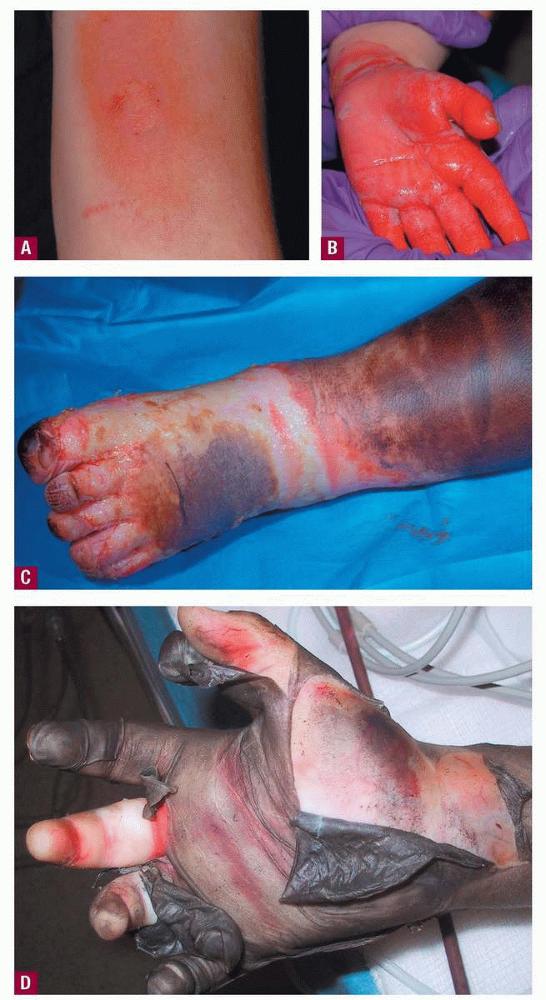
Burn depth is classified
Burns are injuries to tissue that result from heat, electricity, radiation, or chemicals.
- Burns cause varying degrees of pain, blisters, swelling, and skin loss.
- Deep, extensive burns can cause serious complications, such as shock and severe infections.
- Small, shallow burns may need only to be kept clean and to have an antibiotic cream applied.
- People with deep or extensive burns may require intravenous fluids, surgery, and rehabilitation, often at a burn center.
Burns are usually caused by heat (thermal burns), such as fire, steam, tar, or hot liquids. Burns caused by chemicals are similar to thermal burns, whereas burns caused by radiation (see Radiation Injury), sunlight (see Sunlight and Skin Damage: Introduction), and electricity (see Electrical and Lightning Injuries: Electrical Injuries) differ significantly. Events associated with a burn, such as jumping from a burning building, being struck by debris, or being in a motor vehicle crash, may cause other injuries.
Thermal and chemical burns usually occur because heat or chemicals contact part of the body’s surface, most often the skin. Thus, the skin usually sustains most of the damage. However, severe surface burns may penetrate to deeper body structures, such as fat, muscle, or bone.
When tissues are burned, fluid leaks into them from the blood vessels, causing swelling. In addition, damaged skin and other body surfaces are easily infected because they can no longer act as a barrier against invading microorganisms.
More than 2 million people in the United States require treatment for burns each year, and between 3,000 and 4,000 die of severe burns. Older people and young children are particularly vulnerable. In those age groups, abuse must be considered
Chemical burns are caused by caustic substances that contact the skin. Caustic substances are sometimes present in household products, including those containing lye (in drain cleaners and paint removers), phenols (in deodorizers, sanitizers, and disinfectants), sodium hypochlorite (in disinfectants and bleaches), and sulfuric acid (in toilet bowl cleaners). Many chemicals used in industry and during armed conflicts can cause burns. Wet cement left on the skin can cause severe burns as well. The steps in stopping chemical burns are
Because chemicals can continue to inflict damage long after first contacting the skin, rinsing should continue for at least 30 minutes. In rare cases involving certain industrial chemicals (for example, metal sodium), water should not be used because it can actually worsen the burn. In addition, some chemicals have specific treatments that can further reduce skin damage. Further treatment of chemical burns is the same as that for thermal burns. If more information is needed concerning treatment of a burn caused by a specific chemical, the local Poison Control Center can be contacted.
|
Classification
Doctors classify burns according to strict, widely accepted definitions. The definitions classify the burn’s depth and the extent of tissue damage.
Burn Depth: The depth of injury from a burn is described as first, second, or third degree:
- First-degree burns are the most shallow (superficial). They affect only the top layer of skin (epidermis).
- Second-degree burns (also called partial-thickness burns) extend into the middle layer of skin (dermis). Second-degree burns are sometimes further described as superficial (involving the more superficial part of the dermis) or deep (involving both the superficial and the deep parts of the dermis).
- Third-degree burns (also called full-thickness) involve all three layers of skin (epidermis, dermis, and fat layer). Usually, the sweat glands, hair follicles, and nerve endings are destroyed as well.
.
Burn Severity: Burns are classified as minor, moderate, or severe. These classifications may not correspond to a person’s understanding of those terms. For example, doctors may classify a burn as minor even though it can cause the person significant pain and interfere with normal activities. The severity determines how they are predicted to heal and whether complications are likely. Doctors determine the severity of the burn by its depth and by the percentage of the body surface that has second- or third-degree burns. Special charts are used to show what percentage of the body surface various body parts comprise. For example, in an adult, the arm constitutes about 9% of the body. Separate charts are used for children because their body proportions are different.
- Minor burns: All first-degree burns as well as second-degree burns that involve less than 10% of the body surface usually are classified as minor.
- Moderate and severe burns: Burns involving the hands, feet, face, or genitals, second-degree burns involving more than 10% of the body surface area, and all third-degree burns involving more than 1% of the body are classified as moderate or, more often, as severe.
Symptoms and Diagnosis
Symptoms of the burn wound vary with the burn’s depth:
- First-degree burns are red, swollen, and painful. The burned area whitens (blanches) when lightly touched but does not develop blisters.
- Second-degree burns are pink or red, swollen, and painful, and they develop blisters that may ooze a clear fluid. The burned area may blanch when touched.
- Third-degree burns usually are not painful because the nerves have been destroyed. The skin becomes leathery and may be white, black, or bright red. The burned area does not blanch when touched, and hairs can easily be pulled from their roots without pain.
The appearance and symptoms of deep burns can worsen during the first hours or even days after the burn.