Beau’s Lines and
Onychomadesis
(Nail Shedding)
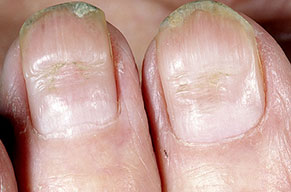
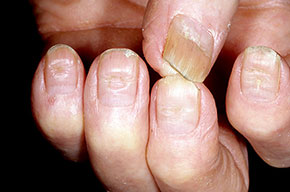
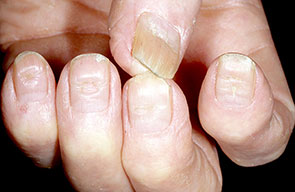
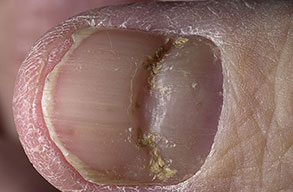
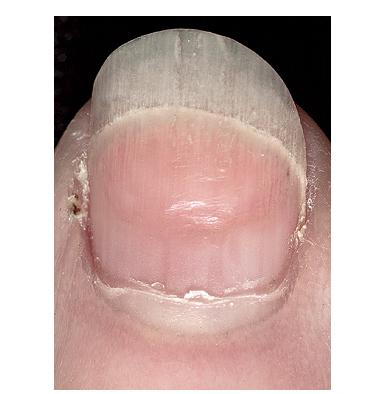
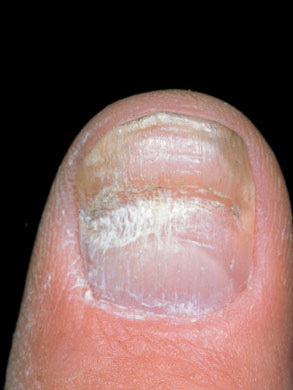
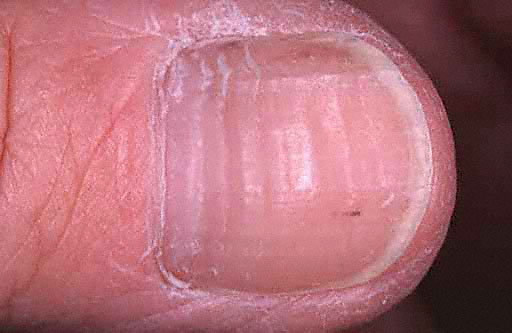
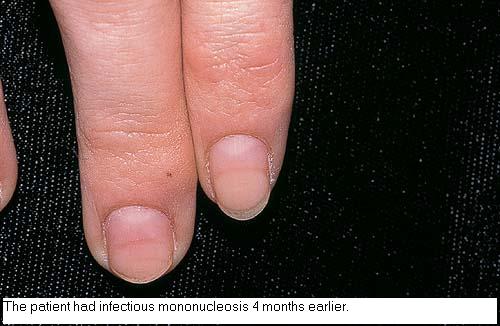
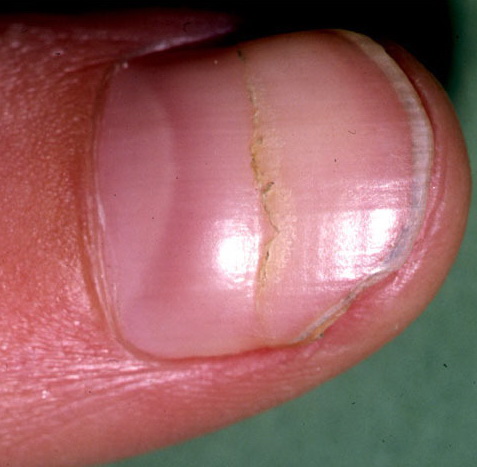
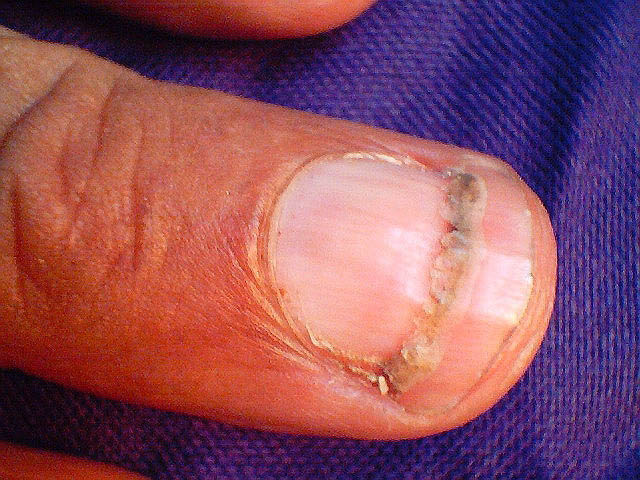
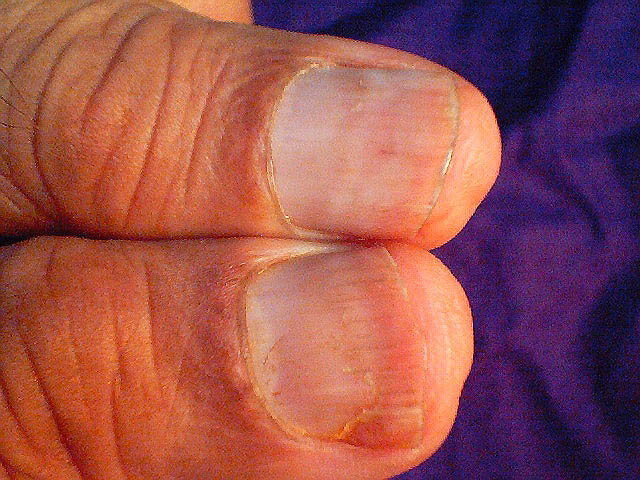
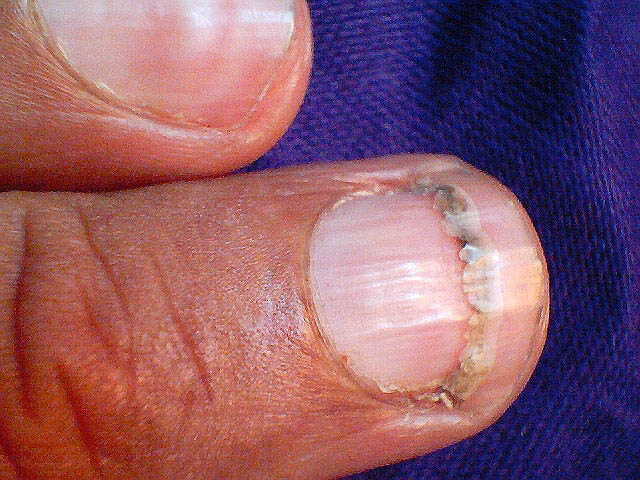
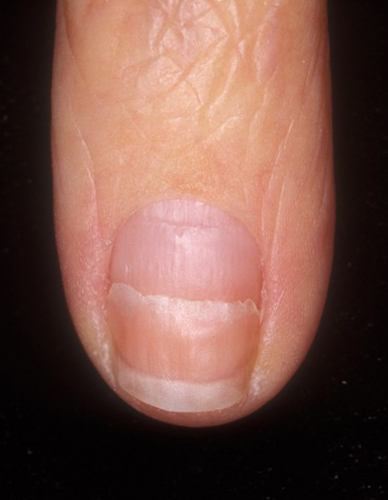
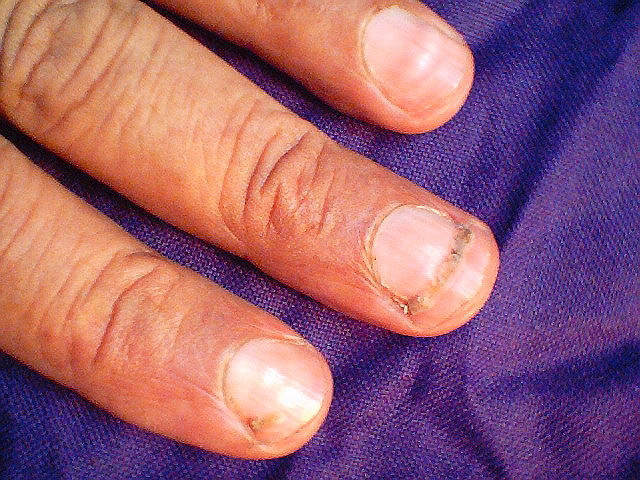
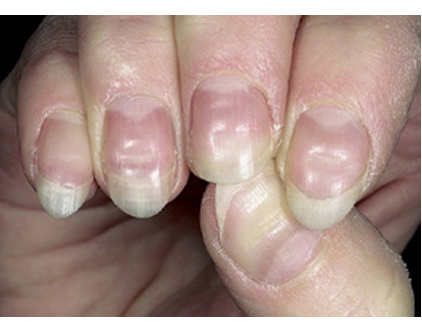
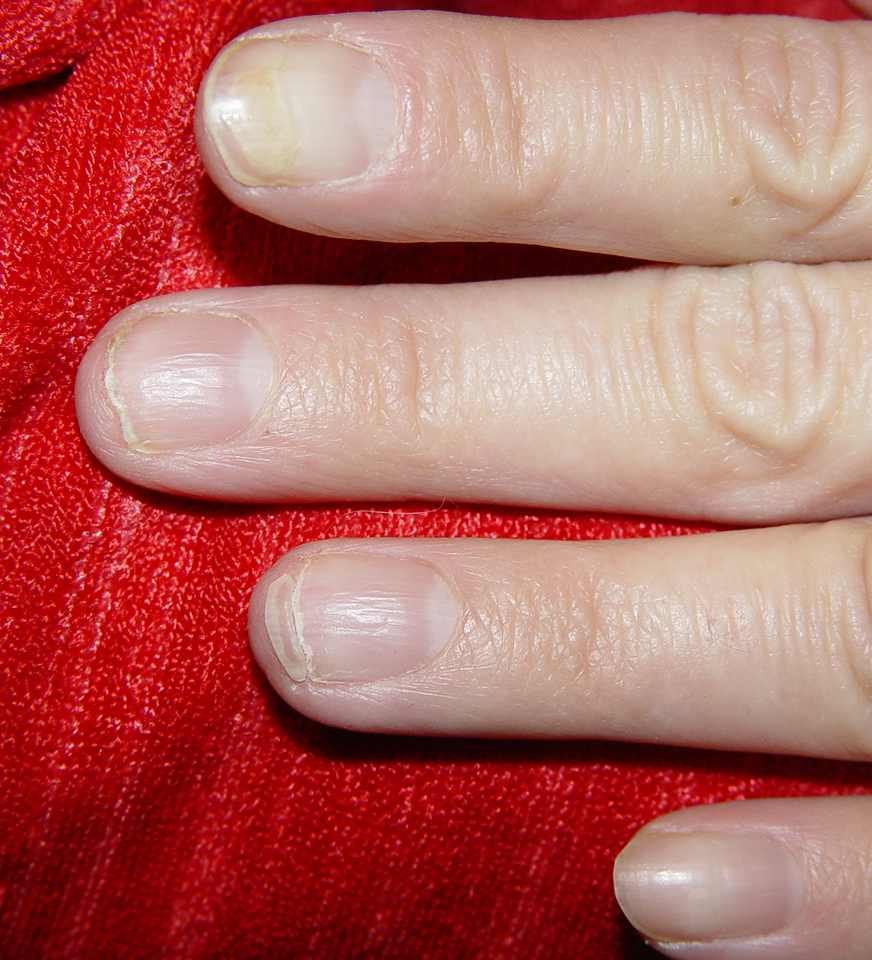
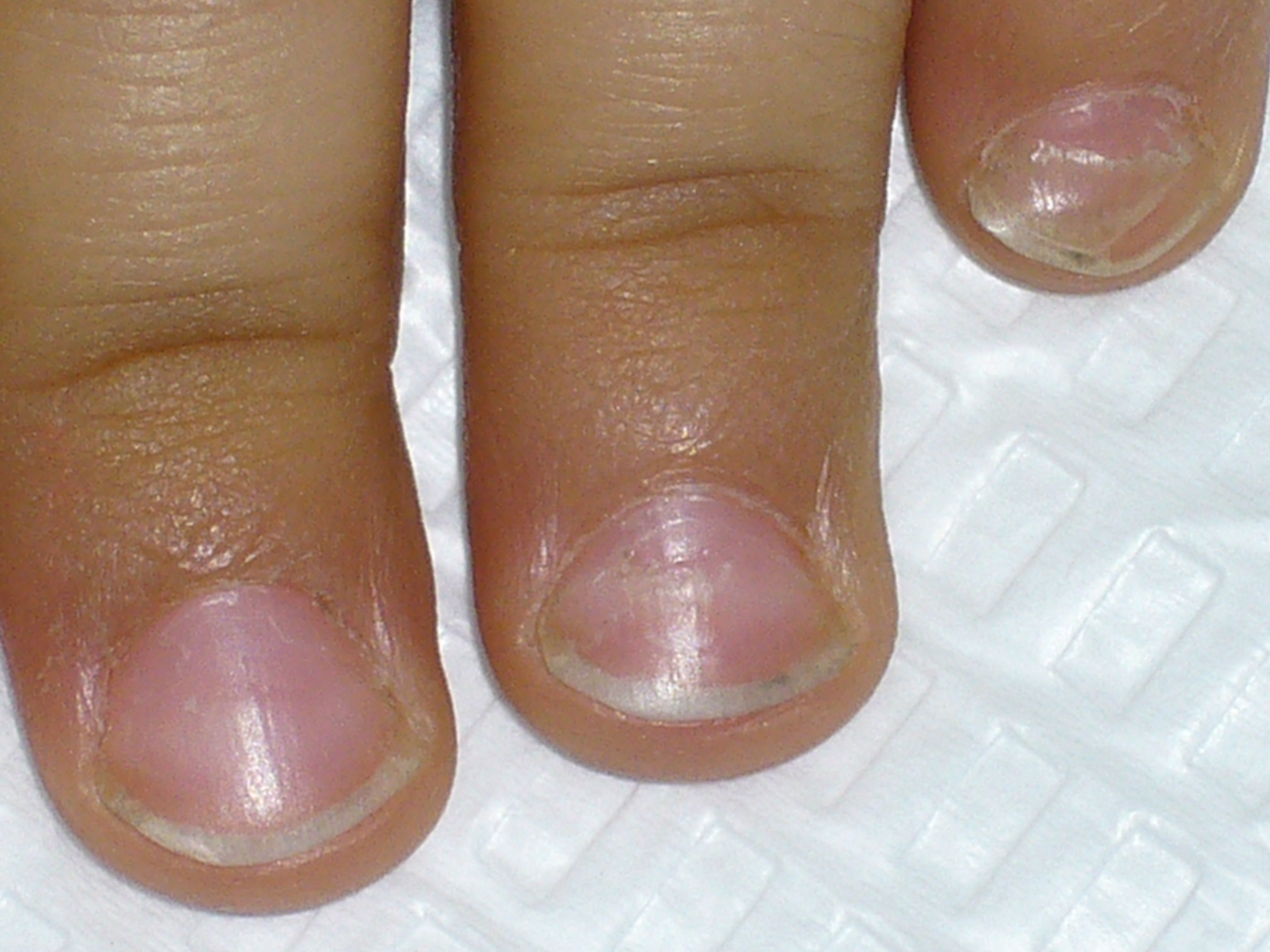
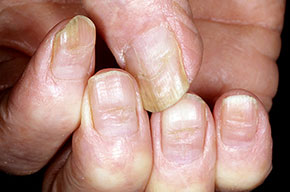
Beau’s lines result from a temporary arrest of proximal nail matrix proliferation and appear as transverse grooves, often deeper in the central nail plate, that move distally with nail growth. Onychomadesis also results from a temporary arrest in nail matrix activity, and the proximal nail plate is detached from the proximal nail fold by a whole-thickness sulcus. Causes of onychomadesis are the same as those for Beau’s lines but are more severe . Multiple Beau’s lines or onychomadesis in the same nail indicates repetitive insults. The time of the insult leading to Beau’s lines can be dated by measuring the distance of the groove from the proximal nail fold. Local trauma, such as from manicures or onychotillomania, or related to local cutaneous disease, particularly dermatitis, periungual erythema, and paronychia, are causes of Beau’s
lines . Beau’s lines at the same levels in several nails suggest a systemic cause. Most common among these are drugs (especially chemotherapy), high fever, viral illness,36,37 surgery, and peripheral ischemia. Onychomadesis in children often relates to recent coxsackievirus infection.
Relation Between Resultant Clinical Manifestations and Location of Pathologic Change |
Proximal matrix | Beau’s lines
Pitting
Longitudinal striations
Longitudinal fissures
Longitudinal grooves
Trachyonychia | Distal matrix | True leukonychia | Proximal and distal matrix | Koilonychia
Onychomadesis
Melanonychia | Nail bed | Longitudinal erythronychia
Onycholysis
Splinter hemorrhages
Apparent leukonychia | Nail bed and hyponychium | Subungual hyperkeratosis | Proximal nail fold | Paronychia
Periungual erythema and hemorrhage |
|
Causes of Beau’s Lines and Onychomadesis |
- Trauma
- Dermatologic diseases
- Eczema
- Erythroderma
- Paronychia
- Systemic conditions
- Use of certain drugs
- High fever
- Viral illness (hand-foot-and-mouth disease; measles)
- Kawasaki syndrome
- Peripheral ischemia
|
|