👤 Users: 0 | 👁 Guests: 2 | 🌍 Total: 2
Balanitis= التهاب الحشفة
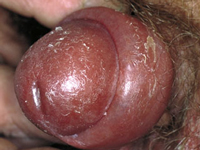

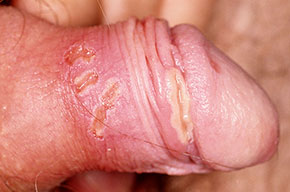
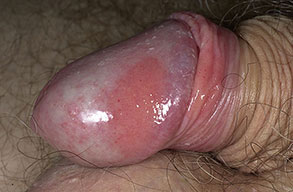
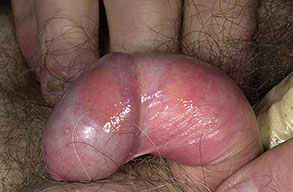
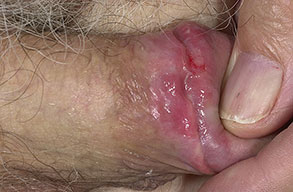
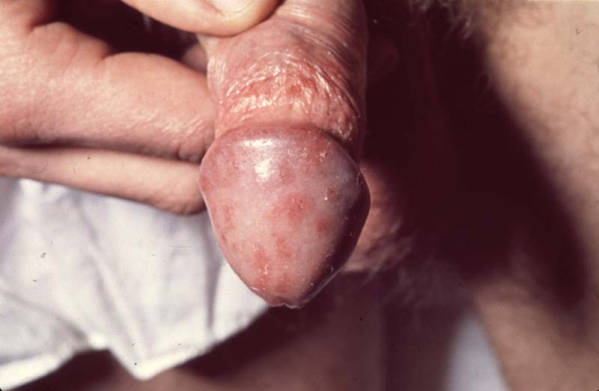
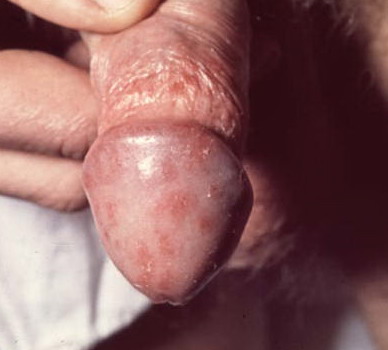
Balanitis
Balanitis is inflammation of the glans penis.1 Balanitis involving the foreskin and prepuce is termed balanoposthitis. Though uncommon, a complication of balanitis (usually only in recurrent cases) is constricting phimosis, or inability to retract the foreskin from the glans penis.
Pathophysiology
Uncircumcised men with poor personal hygiene are most affected by balanitis. Lack of aeration and irritation because of smegma and discharge surrounding the glans penis causes inflammation and edema. Though uncommon, complications of balanitis include phimosis and cellulitis. Meatal stenosis with urinary retention may rarely accompany balanitis. In very few cases, balanitis may contribute to the “buried penis syndrome
History
Patients with balanitis usually present with the following complaints:
- Penile discharge
- Pain or difficulty with retraction of foreskin
- Impotence
- Difficulty urinating or controlling urine stream (in very severe cases)
- Inability to insert a Foley catheter
- Tenderness and erythema of the glans penis
- Itching
- Systemic symptoms such as fever and nausea are uncommon
Physical
Physical examination findings may include the following:
- Erythema and edema of glans penis or foreskin
- Discharge
- Ulceration and/or plaques
- Phimosis (uncommon)
- Signs of urinary obstruction (rare)
- Meatal stenosis
- Bladder distension
- Ballooning of the foreskin when voiding
- Lymphadenopathy
Causes
- Diabetes is the most common underlying condition associated with adult balanitis.
- Other causes include the following:
- Poor personal hygiene
- Chemical irritants (eg, soap, petroleum jelly)
- Edematous conditions, such as congestive heart failure (right-sided), cirrhosis, and nephrosis
- Drug allergies (eg, tetracycline, sulfonamide)
- Morbid obesity
- Several organisms and viruses cause balanitis, including the following:
- Candidal species (most commonly associated with diabetes)
- Group B and group A beta-hemolytic streptococci
- Neisseria gonorrhoeae
- Chlamydia species
- Anaerobic infection
- Human papilloma virus
- Gardnerella vaginalis
- Treponema pallidum (syphilis)
- Trichomonal species
- Borrelia vincentii and Borrelia burgdorferi
- Penile cancer
- Balanitis xerotica obliterans (lichen sclerosus): This is a chronic dermatosis identified by whitish plaques involving the glans and foreskin (shown in the image below)
Laboratory studies for uncomplicated balanitis are not typically necessary but may include the following, when clinically appropriate:
- Serum glucose test (as part diabetes screening)
- Culture of discharge
- Syphilis serology test
- Wet mount
- Potassium hydroxide (for Candida)
- HIV and human papilloma virus titers in selected cases
Imaging Studies
- Ultrasonography or bladder scan to detect urinary obstruction in severe balanitis
Other Tests
- Referral to a urologist for biopsy in chronic cases
- .
Emergency Department Care
- Patients presenting with balanitis but without phimosis should receive the following recommendations and treatment:
- Gentle retraction of the foreskin daily and soak in warm water to clean penis and foreskin.
- In pediatric patients and patients with mild balanitis xerotica, a 2-month trial of antifungals may be attempted; the patient or mother should retract the foreskin gently and apply 0.05% betamethasone twice a day. This applies to children older than 3 years. Success is seen particularly in male children older than 10 years compared with those aged 3-10 years. Success ranges from 65-95%.
- Topical steroids have had only limited success in patients with moderate-to-severe balanitis xerotica obliterans. These patients are more likely to have distal scarring of the foreskin.
- In recurrent cases, 1% pimecrolimus cream was used instead of steroids, with a 64% success rate.2
- Apply bacitracin (not Neosporin) for pediatric patients if bacterial infection is suspected.
- Apply topical clotrimazole for adult men with probable candidal balanitis.
- Obtain a culture of discharge in complicated cases such as those with associated cellulitis, then treat empirically with appropriate antibiotics (typically first-generation cephalosporin).
- A study of 1185 boys concluded that fluticasone proprionate 0.05% was effective and safe in treating associated phimosis, with successful results in 91.1% of patients.3
- Patients presenting to the ED with phimosis and severe urinary obstruction as a complication of balanitis should receive the following care (recommended that surgical intervention be performed by a urologist, if available):
- Steroid cream and gentle retraction of the foreskin, if the phimosis is not too tight, may be used before surgery is contemplated.4,5
- Without damaging the glans penis, dilate the foreskin using a clamp. If the glans penis is adherent to the foreskin, the procedure may be contraindicated. Local anesthesia, analgesia, and/or sedation may be required.
- Perform a dorsal slit incision by cutting the foreskin over the dorsal shaft of the penis to enlarge the foreskin opening. This procedure requires local anesthesia and, possibly, sedation.
- Perform a formal circumcision (preferably in the operating room).6,7
- Circumcision is not a preventative treatment of balanitis in those younger than 3 years old.
Consultations
- Consult a urologist if a dorsal slit incision or circumcision is contemplated.
Medication
The goal of balanitis therapy is to eradicate infection and prevent complications.
Antimicrobial agents (topical)
Therapy must cover all likely pathogens in the context of the clinical setting.
Clotrimazole (Mycelex, Lotrimin)
Broad-spectrum antifungal agent that inhibits yeast growth by altering cell membrane permeability. For adult use, especially those with a positive history of candidiasis in a sexual partner.
- Dosing
- Interactions
- Contraindications
- Precautions
Adult
Apply sparingly over affected area tid
Pediatric
<3 years: Not established
>3 years: Apply as in adults
- Dosing
- Interactions
- Contraindications
- Precautions
None reported
- Dosing
- Interactions
- Contraindications
- Precautions
Documented hypersensitivity
- Dosing
- Interactions
- Contraindications
- Precautions
Pregnancy
B – Fetal risk not confirmed in studies in humans but has been shown in some studies in animals
Precautions
For external use only; avoid contact with eyes; if irritation or sensitivity develops, discontinue use and institute appropriate therapy
Bacitracin (AK-Tracin)
Prevents transfer of mucopeptides into growing cell wall, which inhibits cell wall synthesis and bacterial growth. More commonly used in pediatric patients or patients who are not sexually active.
- Dosing
- Interactions
- Contraindications
- Precautions
Adult
Apply sparingly over affected area tid
Pediatric
Apply as in adults
- Dosing
- Interactions
- Contraindications
- Precautions
None reported
- Dosing
- Interactions
- Contraindications
- Precautions
Documented hypersensitivity
- Dosing
- Interactions
- Contraindications
- Precautions
Pregnancy
C – Fetal risk revealed in studies in animals but not established or not studied in humans; may use if benefits outweigh risk to fetus
Precautions
Prolonged use may result in overgrowth of nonsusceptible organisms
Corticosteroids, topical
These agents have anti-inflammatory properties and cause profound and varied metabolic effects. Corticosteroids modify the body’s immune response to diverse stimuli.
Betamethasone 0.05% (Alphatrex, Diprolene, Maxivate)
For treatment of inflammatory dermatoses responsive to steroids. Decreases inflammation by suppressing migration of polymorphonuclear leukocytes and reversing capillary permeability. Affects production of lymphokines and has inhibitory effect on Langerhans cells.
- Dosing
- Interactions
- Contraindications
- Precautions
Adult
Apply as thin film bid
Pediatric
Apply as in adults
- Dosing
- Interactions
- Contraindications
- Precautions
None reported
- Dosing
- Interactions
- Contraindications
- Precautions
Documented hypersensitivity; paronychia; cellulitis; impetigo; angular cheilitis; erythrasma; erysipelas; rosacea; perioral dermatitis; acne
- Dosing
- Interactions
- Contraindications
- Precautions
Pregnancy
C – Fetal risk revealed in studies in animals but not established or not studied in humans; may use if benefits outweigh risk to fetus
Precautions
Do not use in skin with decreased circulation; can cause atrophy of groin, face, and axillae; may cause striae distensae, rosacealike eruption; may increase skin fragility; rarely may suppress HPA axis; if infection develops and is not responsive to antibiotic treatment, discontinue until infection is under control; do not use monotherapy to treat widespread plaque psoriasis
Treatment must be monitored by physician with expertise in treating balanitis
Immunosuppressant agents
Regulates key factors responsible for the immune response.
Pimecrolimus (Elidel cream)
First nonsteroid cream approved in the US for mild-to-moderate atopic dermatitis. Derived from azcomycin, a natural substance produced by fungus Streptomyces hygroscopics var. ascomycetous. Selectively inhibits production and release of inflammatory cytokines from activated T-cells by binding to cytosolic immunophilin receptor macrophilin-12. The resulting complex inhibits phosphatase calcineurin, thus blocking T-cell activation and cytokine release. Cutaneous atrophy was not observed in clinical trials, a potential advantage over topical corticosteroids. Indicated only after other treatment options have failed.
- Dosing
- Interactions
- Contraindications
- Precautions
Adult
Apply topically to penis bid; short-term and intermittent use only
Pediatric
Not established
- Dosing
- Interactions
- Contraindications
- Precautions
None reported
- Dosing
- Interactions
- Contraindications
- Precautions
Documented hypersensitivity
- Dosing
- Interactions
- Contraindications
- Precautions
Pregnancy
C – Fetal risk revealed in studies in animals but not established or not studied in humans; may use if benefits outweigh risk to fetus
Precautions
Potential exacerbation of existing infection at site of application; may cause burning and irritation; caution with conditions that suppress the immune system (eg, AIDS, cancer); possible risk of lymph node or skin cancer based on animal studies and a small number of patients; may increase risk of viral infections; other adverse effects include headache, sore throat, flulike symptoms, fever, and cough
More on Balanitis |