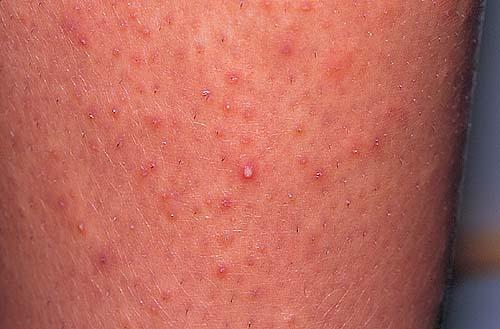
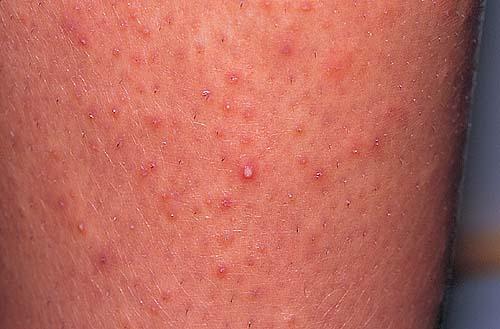
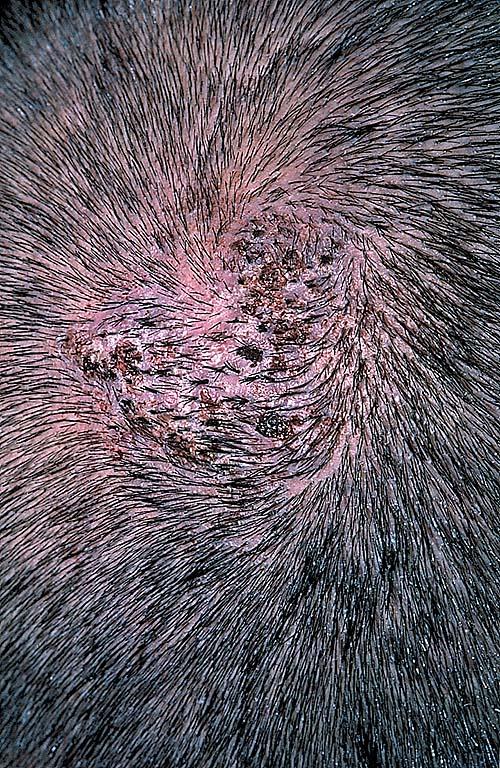
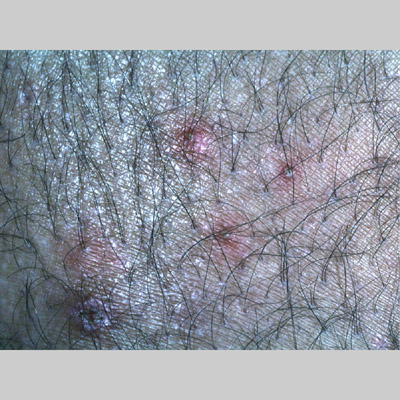
A bacterial infection and irritation of the hair follicle is termed folliculitis.
Folliculitis is probably the most common of all skin infections. Although usually trivial, it can produce extensive disease. It may be superficial or deep, and it causes the formation of a pustule or inflammatory nodule surrounding the hair. The infected hairs may be easily removed.
A more extensive folliculitis of the sebaceous gland (the oily secreting glands) with some involvement of subcutaneous tissues is termed a furuncle (or boil).
A carbuncle is a more extensive, deep-seated furuncle with multiple discharging sinuses.
Causes and Risk Factors of Folliculitis
The most common cause of folliculitis is due to staphylococcus aureus, a type of bacteria. Some of the predisposing factors include an infected wound elsewhere on the body, poor personal hygiene, diabetes mellitus, occlusive cosmetics, tight clothing or hats, exposure to chemicals and a decreased immune system.
This disorder may be recurrent and troublesome. Folliculitis may lead to furunculosis, and if left untreated, it may lead to cellulitis (a more extensive inflammation of the skin). Abscess formation is the major complication of bacterial folliculitis.
Symptoms of Folliculitis
The symptoms may be pain, erythema (inflammation and redness of the skin) and edema. The lesions may range from tiny white-topped pustules to large, yellow pus-filled lesions.
If it progresses, the complaints may be of hard, painful nodules. If the nodules enlarge and rupture, there may be pus on the skin surface.
In severe cases, it may progress to a systemic infection where there would be fever and malaise.
Diagnosis of Folliculitis
In folliculitis, inspection usually reveals pustules on the scalp, arms and/or legs; on the face of bearded men; and possibly on the eyelids.
A wound culture may indicate the bacteria involved, which is most commonly Staphylococcus aureus.
A complete blood count (CBC) may reveal an elevated white cell count.
Treatment of Folliculitis
Sometimes topical antibiotics, such as bacitracin with polymyxin B, may be administered.
Systemic (oral) antibiotics are usually only prescribed for extensive infection, in carbunculosis, systemic infection or spreading cellulitis.
Furuncles and carbuncles may require an incision and drainage of pus.
Self Care
Treatment of most superficial infections may not require the use of antibiotics. Cleaning the infected area thoroughly with soap and water, or with a disinfectant preparation containing chlorhexidine or povidone iodine, is usually effective.
Applying moist heat compresses to the local area helps promote vasodilation (dilation of the blood vessels) and drainage from the lesions.
Prevention of Folliculitis
Keeping skin clean, dry, and free from abrasions or irritation can help prevent folliculitis