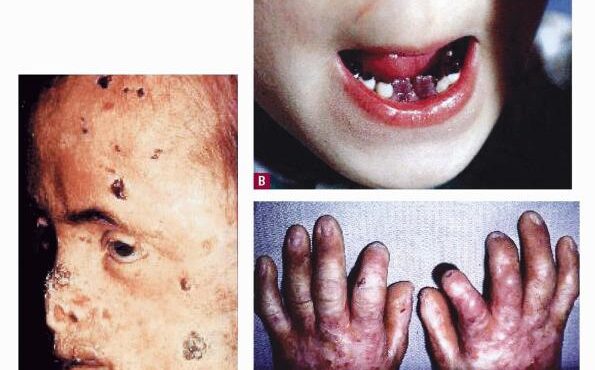
Erythropoietic porphyria (Günther disease). congenital = البورفيريا المكونة للدم +داء غونثير الخلقي

Erythropoietic porphyria (Günther disease). congenital = البورفيريا المكونة للدم +داء غونثير الخلقي Erythropoietic porphyria (Günther disease).   congenital Erythropoietic porphyria (EP) is a rare inborn error of porphyrin-heme synthesis inherited that is as an autosomal recessive trait. The inheritance of 2 mutant alleles for the gene encoding the enzyme uroporphyrinogen III synthase leads to accumulation […]

Read More

Erythropoietic protoporphyria = البروتو بورفيريا المكونة للدم

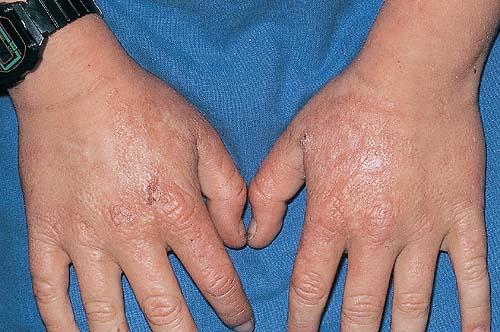
Erythropoietic protoporphyria = البروتو بورفيريا المكونة للدم Erythropoietic protoporphyria   Erythropoietic protoporphyria is a genetic disorder most often arising from impaired activity of ferrochelatase, the ultimate enzyme of heme biosynthesis.1,2 The resultant accumulated excess of its substrate, protoporphyrin, causes 2 principal manifestations: (1) a distinctive acute cutaneous photosensitivity typically appearing in childhood and (2) hepatobiliary disease.1,3,4,5 […]

Read More

Erythrosis Interfollicularis Colli= الاحمرار بين الاجربة الشعرية على العنق

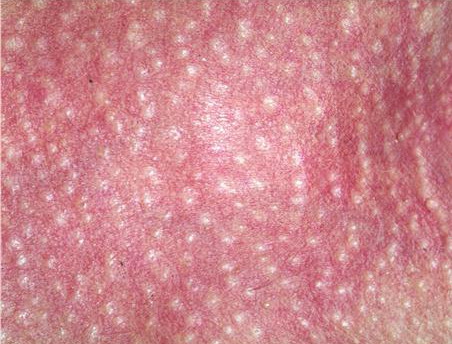
Erythrosis Interfollicularis Colli= الاحمرار بين الاجربة الشعرية على العنق Erythrosis Interfollicularis Colli   It’s a frequent affection, principally between 40 and 50 years of age but not very known because the patients rarely consult for it. Clinically they insist on the respect of a triangulary and lozengical median zone, and on the sight in “plucked […]

Read More

Erythrasma=Corynebacterium minutissimum = حمامى الارفاغ

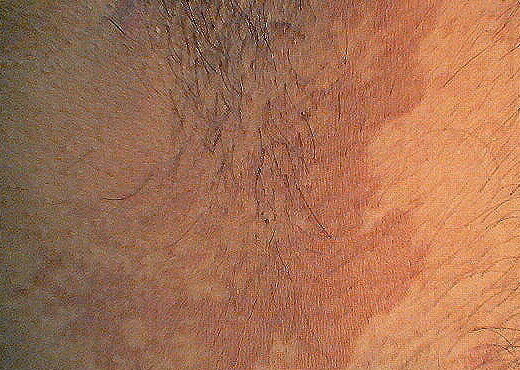
Erythrasma=Corynebacterium minutissimum = حمامى الارفاغ   Erythrasma is a common superficial bacterial infection of the skin characterized by well-defined but irregular reddish brown patches, occurring in the intertriginous areas, or by fissuring and white maceration in the toe clefts. Etiology and Epidemiology.   minutissimum, the etiologic agent of erythrasma, is a short, Gram-positive rod with […]

Read More

Essential telangiectasias = توسع الشعريات الاساسي

Essential telangiectasias = توسع الشعريات الاساسي Essential telangiectasias A telangiectasis refers to a visibly dilated blood vessel on the skin or mucosal surface. Telangiectases that develop in the absence of any preceding or coexisting cutaneous or systemic disease are considered to be primary or essential. Telangiectases resulting from or in association with a known disease […]

Read More

Exanthem –Viral Enterovirus =طفح فيروسي

Exanthem –Viral Enterovirus =طفح فيروسي Dermatologic Manifestations of Enteroviral Infections   The human enterovirus genus is a member of the Picornaviridae family of small, icosahedral, single-stranded, positive-sense RNA viruses. A total of 92 serotypes are currently recognized by the International Committee on Taxonomy of Viruses classification1 : Human enterovirus type A (17 serotypes): These include coxsackie […]

Read More

Exanthematous pustulosis = الطفح البثري

Exanthematous pustulosis = الطفح البثري Acute generalized exanthematous pustulosis Acute generalized exanthematous pustulosis (AGEP) is a rare skin eruption most commonly caused by medications. It is characterized by fever and the acute eruption of non-follicular pustules overlying erythrodermic skin. Histopathology shows subcorneal pustules with a background of dermal edema and spongiosis, leukocytoclastic vasculitis, perivascular eosinophils, […]

Read More

Excoriation= التسحج

Excoriation= التسحج Neurotic Excoriations     Patients consciously create neurotic excoriations by repetitive scratching. Neurotic excoriations should be distinguished from dermatitis artefacta, in which patients create lesions for secondary gain. Neurotic excoriations can be initiated by some minor skin pathology, such as an insect bite, folliculitis, or acne, but it can also be independent of any […]

Read More

Excoriations Uraemic= التسحج التالي للقصور الكلوي وارتفاع البولة في الدم

Excoriations Uraemic= التسحج التالي للقصور الكلوي وارتفاع البولة في الدم Uremic Pruritus   The prevalence of UP has declined in the past 10 years as a result of improvements in dialysis and the development of biocompatible dialysis membranes.[4] However, recent surveys (including the Dialysis Outcomes and Practice Patterns Study [DOPPS], which has assessed more than 18,000 […]

Read More
error: Content is protected !!