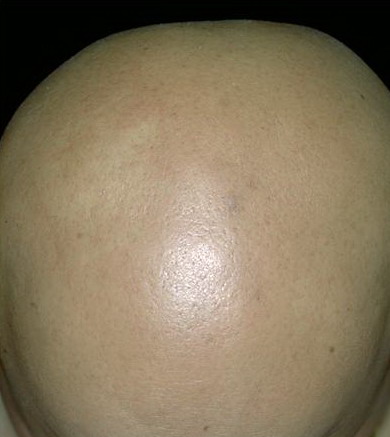
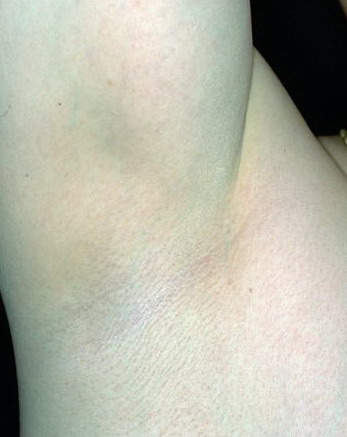
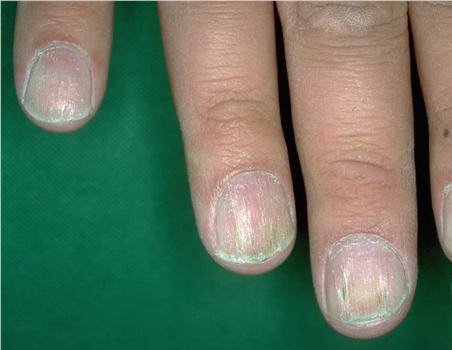
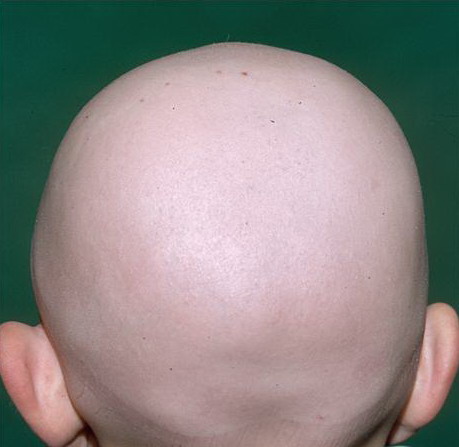
densation of a cluster of mesenchymal cells that will eventually form the dermal papilla. The dermal papilla then stimulates the division of overlying, epithelially derived matrix cells in the hair plug. These cells divide rapidly and differentiate into either inner root sheath cells or hair shaft cells, depending on their position in relation to the longitudinal axis of the follicle . Hair growth proceeds in a cyclical fashion throughout life, with the growth phase being followed by a regression phase (during which the upper portion of the follicle degenerates) and a resting phase. At the end of the resting phase, epidermal stem cells located in the bulge region of the outer root sheath are thought to be recruited by signals from the dermal papilla to form the hair matrix, and a new cycle of growth is initiated . Although these events have been described extensively in model systems, the genes governing these processes are largely unknown. There are many forms of inherited alopecia or hair loss, showing extensive variation in age of onset, severity, and associated ectodermal abnormalities. Congenital alopecia universalis (MIM 203655) or congenital atrichia (MIM 209500) without associated ectodermal defects is very rare and is inherited as an autosomal recessive trait. We and others have recently reported a linkage of this form of atrichia to chromosome 8p12 . Further, we have mapped the human homolog of the hairless gene in the same region of chromosome 8 and have identified pathogenetic mutations in this form of atrichia . The hairless gene product is a putative transcription factor with a single zinc-finger domain and is highly expressed in the brain and the skin. It appears to function in the cellular transition to the first adult hair cycle, and in its absence, hair growth completely ceases, a new hair is never induced, and the result is a complete form of inherited alopecia. |