dermaamin
Spiradenoma =ورم غدي عرقي
|
SPIRADENOMA
Epidemiology. Spiradenoma occurs in young and middle-aged adults.
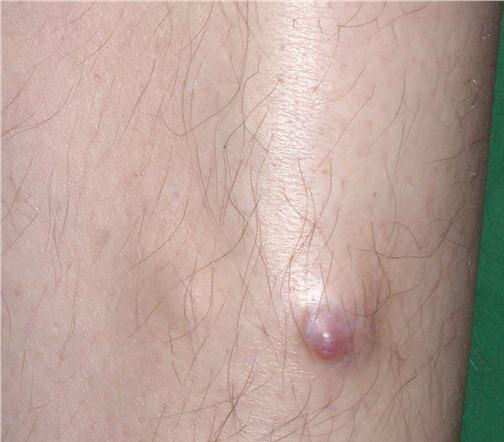
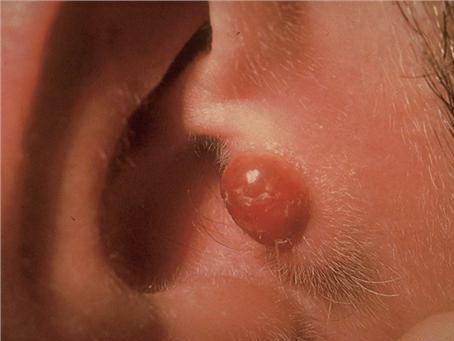
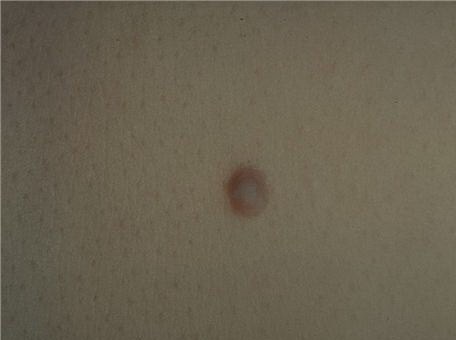
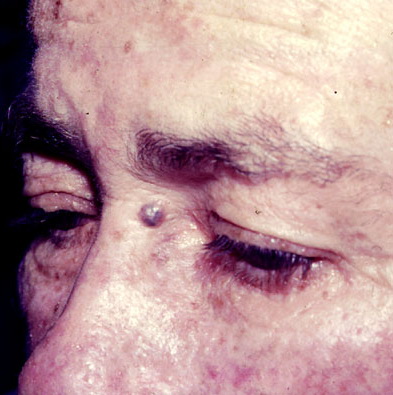
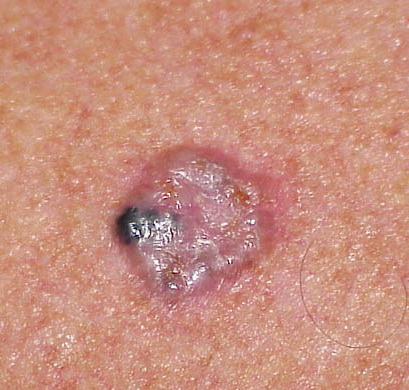
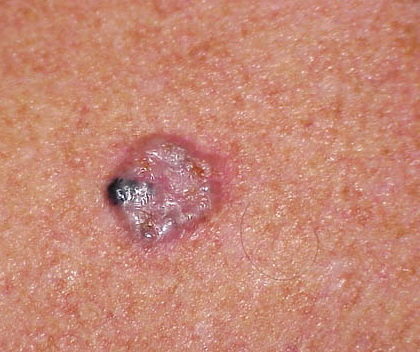
Clinical Findings. Spiradenoma usually presents as a solitary, slowly growing, sometimes painful, reddish-brown, intradermal, or deeply subcutaneous nodule. Eccrine spiradenomas may be seen in Brooke-Spiegler syndrome (an autosomal dominant condition) in association with multiple cylindromas and trichoepitheliomas.
Histopathology. There are one or several well-circumscribed, basophilic nodules in the dermis, sometimes with extension to the subcutis. Nodules show epithelial cell aggregates arranged in sheets and cords or in a trabecular pattern . They consist of two types of cells; namely, small, dark-staining basaloid cells located at the periphery, and larger cells with a pale nucleus situated mostly in the center. Tubular or cystic structures are occasionally noted within the epithelial aggregations. Some areas of the tumor contain a PAS-positive hyaline material.
Prognosis and Clinical Course. Malignant transformation is infrequent and presents with ulceration.
Treatment. Complete surgical excision is the treatment of choice
|
dermaamin is proudly powered by WordPress