Onychomycosis
Onychomycosis is a common toenail disease, and its prevalence increases with age.
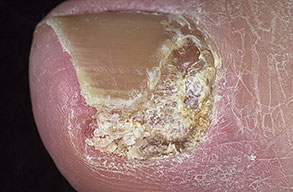
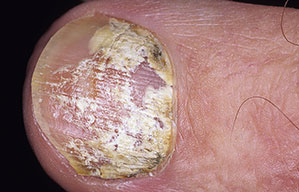
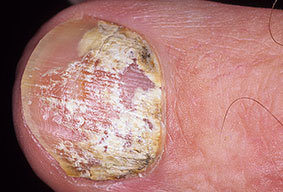
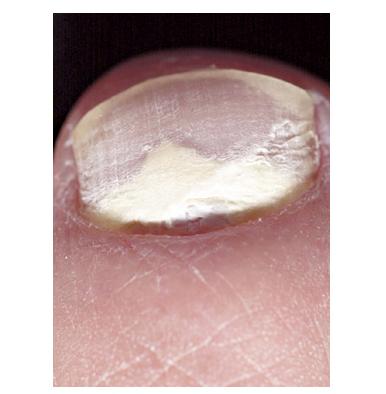
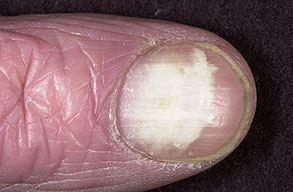
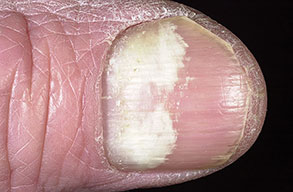
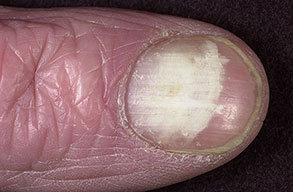
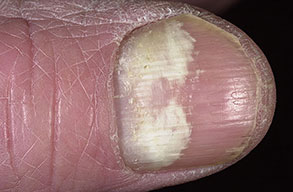
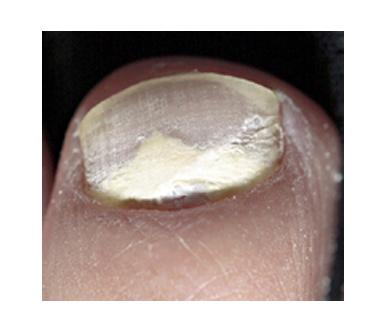
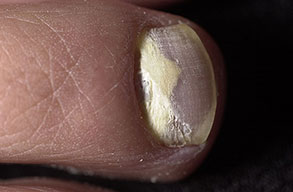
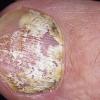
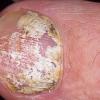
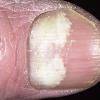
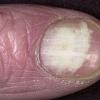
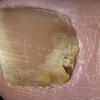
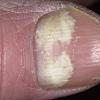
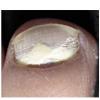
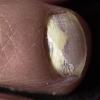
Clinical features depend on type of nail invasion . The possibility of mold onychomycosis should be suspected when proximal subungual onychomycosis is associated with periungual inflammation or when white superficial onychomycosis is severe and involves the entire nail plate . Nondermatophytic onychomycoses are becoming more frequent worldwide and represent a clinical problem, because they usually respond poorly to systemic treatment.
ONYCHOMYCOSIS AT A GLANCE
· Fifteen percent of the general population and 40 percent of individuals older than 60 years are affected.
· Clinical presentation reflects the route of nail invasion.
· Dermatophytes account for 85 percent of cases, nondermatophytic fungi for 15 percent.
· Infection with human immunodeficiency virus should be suspected with proximal subungual onychomycosis (PSO).
· Mold fungal infection should be suspected when PSO is associated with acute periungual inflammation or when white superficial onychomycosis involves most of the nail plate.
· Candida sp. are the causative agents only in immunosuppressed individuals.
· Toenails are involved in most cases; tinea pedis is usually associated.
· The cure rate for toenail onychomycosis is approximately 80 percent with the use of systemic antifungals, but recurrences are frequent (up to 20 percent). Mold infections respond poorly to systemic treatment.
|
Clinical Presentations of Onychomycosis
|
|
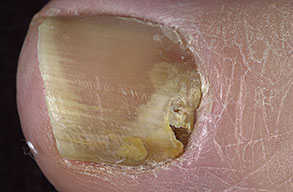
Distal subungual onychomycosisa
|
Trichophyton rubrum, Trichophyton interdigitale
|
|
Onycholysis associated with subungual hyperkeratosis, patchy or linear yellow discoloration
|
|
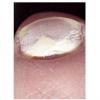
Proximal subungual onychomycosis
|
T. rubrumb
|
|
Proximal leukonychia with normal nail plate surface
|
|
Fusarium sp.
|
}
|
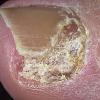
Associated with periungual inflammation and purulent discharge
|
|
Aspergillus sp.
|
|
Scopulariopsis sp.
|
|
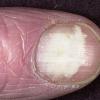
White superficial onychomycosis
|
T. interdigitalea
|
|
Multiple superficial areas of friable opaque leukonychia
|
|
|
Fusarium sp.
|
}
|
Involvement more diffuse and deeper
|
|
|
Aspergillus sp.
|
|
a Associated with tinea pedis.
b Possible marker of human immunodeficiency virus infection.
|
|